Ben Franklin on my Windshield

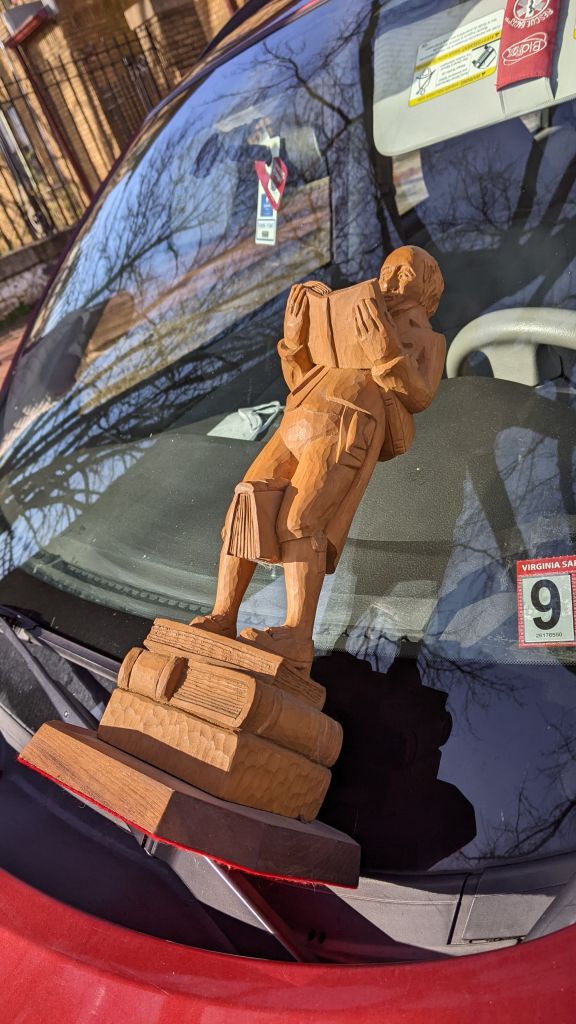
Yes, that’s a mini wooden statute of Ben Franklin reading a book, left mysteriously on my car’s windshield recently while my daughter and I were taking a stroll through Congressional Cemetery. Cemetery walking in DC is a THING, it’s normal and at Congressional it’s the best dog meetup in town, as the cemetery offers a membership for dog walkers. To us, it’s dog therapy, as the many fluff balls there on doggy recess will often approach, looking for a little extra love. We come here to gaze at the cherry trees that grace the well-worn rows of graves as well, far away from the hordes that descend on the tidal basin; and of course, for the history — if you really want to know this town, Congressional is one of the must- see, do learn places.

On this day though as we jumped back into “Red” as our Subaru is called, for her cherry-ish coloring, as I was about to put the key in the ignition, I naturally glanced out the front window and well, with me and my language, “What the hell” came out. We both hopped out of the car, and for nearly a minute just gazed at this little statue, resting so peacefully on the glass on this early spring day. Now, Congressional is not located on the best part of Capital Hill — it is a greatly improved area, but its patrons and permanent residents rest in the shadow of the D.C. jail — home to the notorious and temporary law breakers in the city. The neighborhood, glammed up rowhouses aside, does draw the notorious and temporary’s associates to the area, who do have “leave-behinds” that unflatteringly grace the sidewalks on occasion.

My first reaction to the statue: Do we still have any medical gloves in the car from early Pandemic gas getting? No, but we do have an old pair of winter gloves. But where to put Ben? Leave him on the cemetery stoop? Who would leave such a thing? Is it because of all the bookstore stickers on the car? Who is just walking down the road with a Ben to leave on someone’s car? Ben did find a resting place, thanks to a Congressional staffer (cemetery, not Hill) headed inside that offered to place him in the sun, near the office’s entry, but not before she too, asked: Why, who, huh?

This may seem like a long wind-up to sum-up this semester’s adventures in the world of publishing, but while reflection starts with a look-back, it most often leads to more questions. I have no idea who, what, why Ben was left on my car — but it sure is a great story. After a wonderful semester of interning (which still feels really odd at my age, can we think of a new term for this?) with an amazing organization, I can say here in late April, what I have is questions. I’ve written my writer’s contract with many specifics (and notes to add off-ramps and rewards from K.W. – thank you), and several clear directions. But I’ll admit, last night when reading of bell hooks’ work and the volume of volumes she created, I had that oh-so-familiar feeling that I’m spinning my wheels. It was also a long day of grading essays, which often leads to a certain amount of despair, but today I plan to greet the day anew…no more comparing my lack of volumes to anyone. The journey is just the journey, and some days aren’t going to be great when it comes to production, focus, or walking on the treadmill of life (hence off-ramps and rewards, thanks x two, K.W.).

My internship will continue into the summer (yeah), and I will be able to work again with my organization’s team as well as one of my treasured MFA mentors, write in the realm of spirituality, and perhaps board yet another train north to Philadelphia. Ben Franklin. Philadelphia. Ben Franklin. One book on my to-read list is Signs: The Secret Language of the Universe. As a person who thinks every blue bird is my grandmother visiting with a message, I am pretty convinced Ben’s appearance on my window is no coincidence. Philadelphia. Ben Franklin. Philadelphia. Ben Franklin. Books, books, books. Write, write, write — hello thesis year! Shall I dedicate it to Ben? One more question to ask, and answer.
Where are the writers in publishing? Look to the foundations.

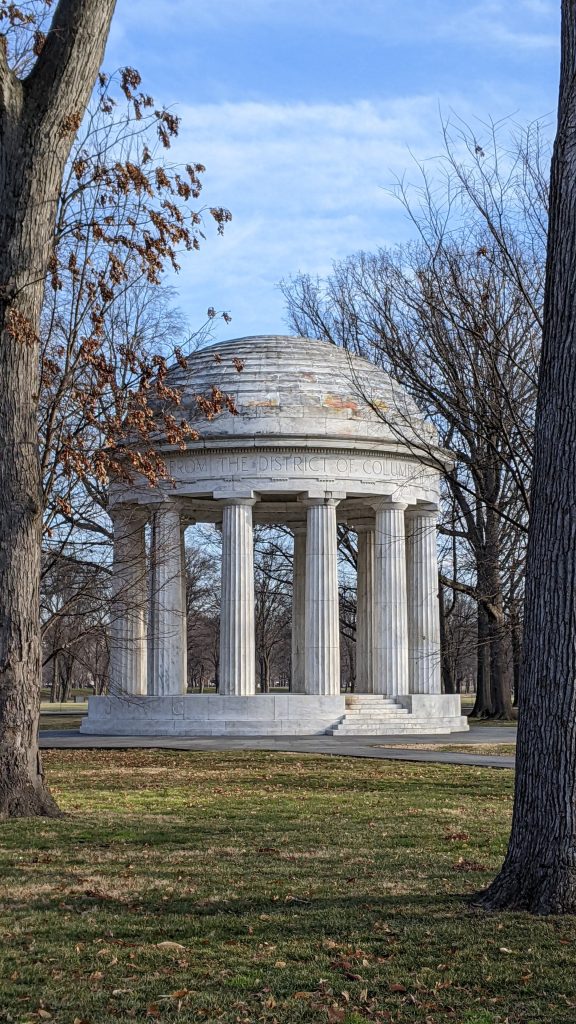
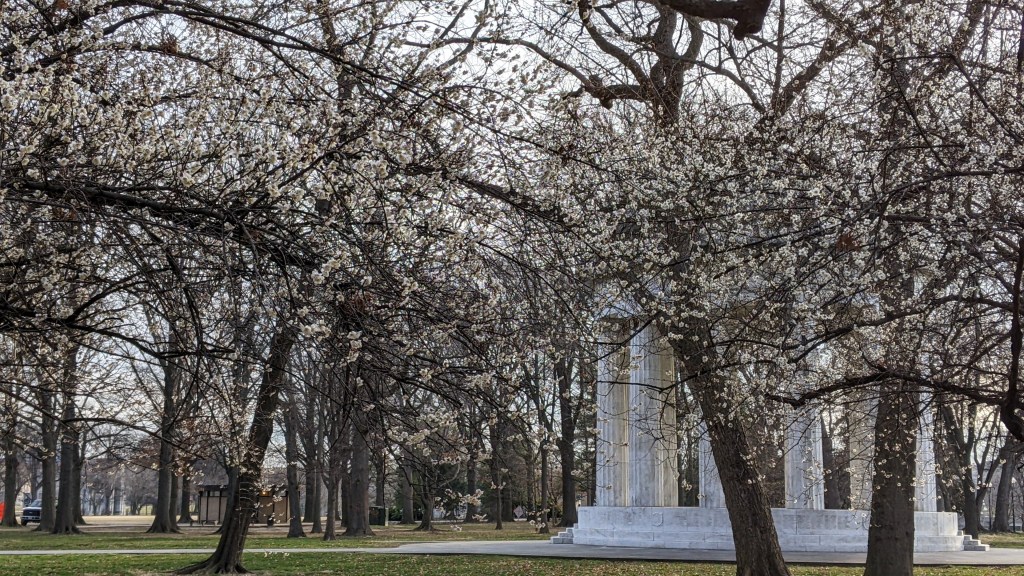
Recently on one of my morning walks, I snapped this photo of early cherry blossoms near the WWI Memorial just off the Washington Mall. On the base on this marble memorial, that changes hue as the sun rises and sets, are the names of D.C. residents that lost their lives in the Great War. Often when I’m walking near by in the early morning, photography equipment graces the steps as soon-to-be brides and grooms or recent graduates in their flowing robes gaze dreamily into the distance –maybe thinking of the past, maybe thinking of the future — but I’m guessing not thinking of the names or memories upon which they stand. In this photo, I particularly enjoy how the memorial is graced with these new blossoms, but also partially hidden – but solid, and foundational as well to the blossoms’ new found existence and beauty.

So too, are writers in publishing. Writers are everywhere — they are the foundation upon which publishing rests and they are everyone that works within, near, adjacent to, and down the road from publishing. In my view, we often think of the real writers as the stars whose names grace book covers or magazine tables of contents; but writers are involved at every step of the way from the website copy of any journal to tweets to contract drafting. These behind-the-scenes writers that often don’t have bylines or signatures are no less creative that those whose books and articles we readers soak up with glee upon publication; these writers make writing happen — they are the foundation, the marble, often hidden, but right there in lockstep with the cherry blossoms. These writers often have not-so-apparent creative writing lives as well, that they work on in the after-hours, crafting away when our own ideas have gone to press (or web, or the myriad of other forms writing gets out into the world).

In my own publishing internship, writers are all around me as every staff person writes in a variety of capacities nearly each day whether for the organization’s blog, editing work of guest writers, composing reports or marketing materials or grant drafts– words are all around everyone, everyday. For me, I’ve had the chance to complete two byline pieces so far (publication pending in April) and will be beginning my next piece within the next several weeks. Writing is the foundation here, whether in front of the camera so to speak appearing in the magazine, or in all that makes the magazine happen (and there is much).

I’ve spent the last few days with friends, one of whom is a writer for a national architecture firm — he’s written books, more articles than I could count if I tried, served as an editor for an architecture magazine, and he’s done a little freelance work for the local PBS station as well. What ties his work all together is the idea that writing is everywhere — there is always a story to tell, though every story is not glamorous perhaps, it is worthy of telling because there are readers out there that need and want to know things about his firm’s projects, or architects or their clients. These reaffirm my own ideas that have taken shape this semester, combined with my own past experiences: writers are all around, within every corner of publishing, and there are a vast number of ways to be a writer.

Reflection: What’s New is Old, but Different

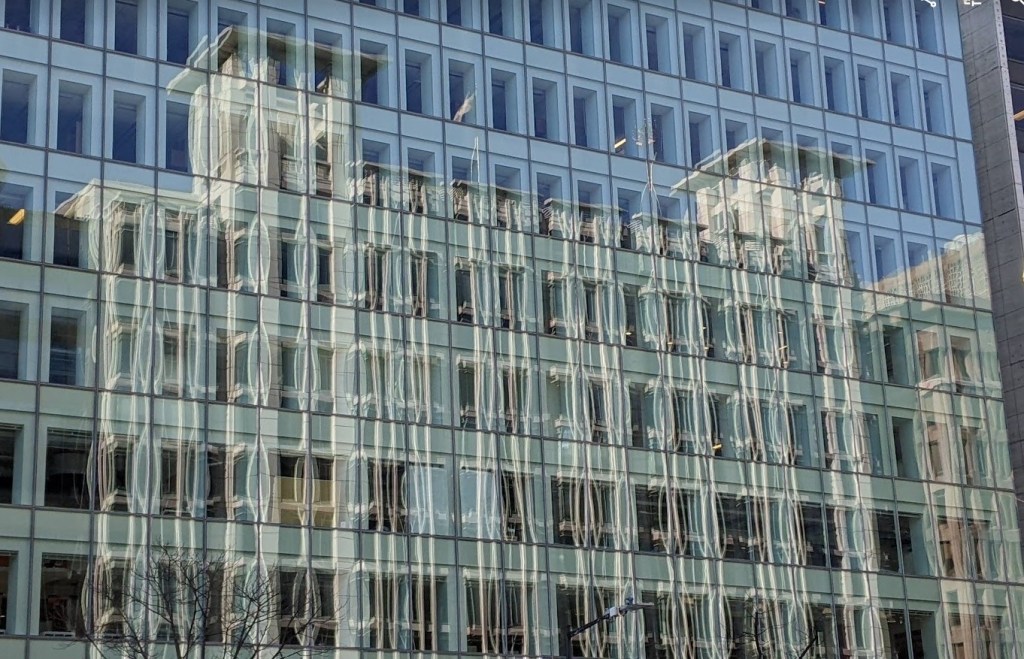
As I sat downtown DC over the weekend at my favorite corner (17th and Pennsylvania), I noticed this beautiful reflection as I drank Sunday morning coffee with my daughter. The new facade of the building directly in front of me awash in the blue of a mid-February blue sky; it’s expanse of glass reflecting the classical parapet-like structure of the white masonry building on my side of the street. The reflected image fit succinctly into the expanse of new glass; line to line, floor to floor, with the masonry taking on a ghostly note — floating against the moorings of glass just steps away.

So too are discoveries, or perhaps realizations this week. My internship places me back in the world of nonprofits — all the inner workings and intertwining of ideas, plans and strategies to bring the cloudy to solid life — not unlike this streetwise transition from masonry shadow to gleaming glass. When I left this (nonprofit) or first world as I think of it in relation to my career, I didn’t think I would ever feel the pull to return — but here I am, considering the road ahead and feeling pretty certain (though not yet saying aloud) that this is the direction I should head. I’m not sure if I am surprised by this realization, but I welcome it and in some ways I had a distinct hand, and interest in heading toward change. Even now, I hesitate to say I want to leave teaching though it’s been on my writer’s board since last semester to work toward a teaching adjacent day job. I think perhaps this idea of what’s old is new again is fostered by the soft landing — being able to intern within subject matter that I already have an affinity for — and by the graciousness of my interning hosts to welcome me into the fold.

Where this line of thinking will lead, I am not yet sure — but without the current leap I wouldn’t have come to this realization at all, so some organic gardening in respect to letting this realization rest in both camps for awhile, history and future, reflection and expanse is probably the best idea. A boss (Richard) long ago told me it’s always best to know what one doesn’t want, because that makes figuring our what one does want, so much easier. So, I’ll toast Richard from afar as he’s now decamped to Palm Springs — as I know what I don’t want, and I’ll figure out the steps to get what I do want, now that the vision grows clearer.

Rolling on the Rails, Philadelphia-Bound

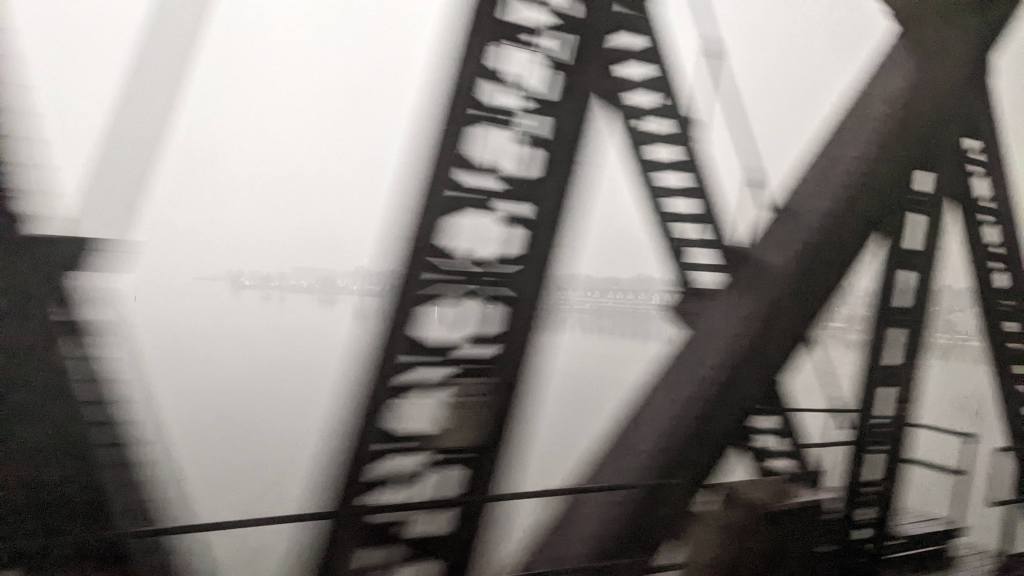
Crossing the Susquehanna River

Anyone who knows me, knows I love trains. This week I’m working on an essay that is about this particular train trip, but has nothing to do with the reason I headed to Philadelphia in late January — on the heels of a snow and ice storm, in intensely dense fog mixed with dripping drizzle. For part of this particular journey I felt like I was back in Seattle, so enveloped in grayness, that it’s tough to find landmarks outside the grit covered windows of my business class seat.

On to the purpose of my trip. I wanted to meet with my internship organization in-person (hq’d in Philadelphia) for a few reasons, most importantly because over the course of my working life, this organization has been part of it in some fashion since late 1998 — and 25 years means something in the broader scope of how we change and morph our careers over time, but can still find ways to work with organizations and people with whom we’ve connected over vast swaths of time and geography.

For this week’s MFA work, I am tasked with writing about my favorite thing with my internship placement — and hands-down, it is the opportunity to work with people and an organization that I admire, and to foster and continue to build relationships. This reflects also what this organization works on each and every day, as well as these over-time relationships: how do we take what we know, consider new ways to use that knowledge (and in this case historic spaces) and imagine what the future may look like where communities are embraced and welcomed. To me, this speaks to a much larger need across the realm of publishing, as well as writing; it feels that too often, closed doors are more often the case and gatekeepers abound while “new” is set aside, because, “that’s just now how it’s done.” I’m not a particular fan of disruption for disruption’s sake, but it does have its place. As an older, professional woman, these issues are of great concern to me as I continue in the workforce and examine new potential roles inside and outside of publishing, writing and education.

In addition to relationships, the nature of how my internship is evolving is also a favorite aspect — as it not only goes to my skills and interests — but also leads me to my roots of professional life as well, where I can (in those rare moments of quiet) envision roles for myself that combine the best of the old life with the best of a new life. Crossroads would be an apt comparison. So far, I’ve been tasked with writing a 1,500 word profile of a dynamic arts organization and next I’ll be working on case studies; both of these involve interviewing a number of people, figuring out a narrative approach, and weaving the story together. For the profile, it will appear in the spring issue of the organization’s magazine; the case studies will appear on the organization’s blog. Next, I’ll be working on interviewing conference attendees that will lead to a published report/proceedings. I’ll only be tangentially involved in production, but I’ve held that role before, so when we recently went over the production schedule for the spring magazine issue — all kinds of details I hadn’t thought about in a long time came back pretty quickly. All of these actions and activities are in-line with the world of organizational, and scholarly/educational publishing which is a lane in which I feel comfortable and one in which I know I can and will explore more possibilities.

January: The Month of Beginnings #baypathmfa #morningview

The sun rose this morning over the top of my chosen treadmill at the gym — shining its winter light and miniscule heat over the frozenness of nearly week old snow and ice that may not melt by spring. In between my view over the treadmill’s control panel, planes landed from the north — following the path of the Potomac River en route to nearby National Airport (as a long timer here, I have never brought myself to call the airport by its new-ish name). The morning begins, the treadmill begins, the planes begin their rapid descent — beginnings are abundant in January. My birthday falls on the first day of January: ground zero for a new year’s beginning throes…there is no escaping the idea that change is upon me each and every year as the ball drops in Times Square — I begin each year with a new number to celebrate, revile or make peace with — there is no predicting how each number will strike me until it us upon me. This year, January is off to a fiery start – new roles and responsibilities, a pending graduation, most likely relocation; the level of planning required to surf through the next five months is filled with if-then statements.

As this month roars along, I find myself in the position of intern as part of my MFA program — a totally new role for me as I’ve never been an intern at any point in my career. And admittedly, it’s not a title I’m completely comfortable with at this point in my life, perhaps I’ll become more accustomed to it as the current semester proceeds. I am incredibly fortunate to be spending my intern time with an organization, and people, that I have great respect for — and I’m thankful for the long-term relationships that I’ve carried forward to be in this position from my previous professional life. So for this beginning, I think of it more in terms of homecoming with new eyes and practical mission: my work will be in a field that I have a keen interest in with people that are dedicated to preservation of sacred spaces and places, community building, the arts and knowledge sharing. My realm will focus on the publishing aspect of the organization from writing profiles of funding recipients, to interviewing community leaders and religious leaders that will lead to published convening reports and learning the ins and outs of organizational publishing — with which I have previous experience, but new trends and means will provide new insight and ideas. I had been wondering for awhile how to find my way back to this organization — so the intern experience is a beginning in that way, as it’s opened that door to new conversations and opportunities.

For this past week, my focus has been on reading past issues of the three-times yearly magazine the organization publishes to understand the level of depth that profiles entail as preparation for the profile piece that I’ll be preparing for the next issue. I’ve spent time researching my profile subject as well, and interviewing the founder – next I’ll be interviewing several more (anticipating two) for this piece as I consider how the profile subject (an arts organization) impacts the communities it serves. And tomorrow, bright and early I’ll jump onto Amtrak and head north to Philadelphia to meet with my organization to discuss further details of how my intern semester will proceed: projects, deadlines, brainstorming and ideas. The train is just under two hours each way and a trip I’ve taken more times than I can count — so when I deboard, I’ll be looking for both the familiar and the new as I wind my way toward Rittenhouse Square and up to the 10th floor to meet colleagues from the past and new.

Alexandria’s Old Town Books #afternoonview

This week as part of my MFA publishing course, we are off to visit a local indie bookstore — I hope you’ll visit Old Town Books soon!

PXL_20231115_204901119.jpg

Location: Alexandria (Old Town), Virginia

Open since: November 2018

Owner: Ally Kirkpatrick. See info on all staff members hereLinks to an external site.

Instagram: @oldtownbooksLinks to an external site.

Description: General interest fiction/nonfiction, plenty of local/DC politics/government related books, great children’s section, some gifts. Currently holding a book drive for Campagna Center’s children’s programs Links to an external site.(part of their Book LoveLinks to an external site. program).

On a changing-leaf filled afternoon, my daughter and I headed to Old Town Books to celebrate her completion of her high school poetry class (she’s now 20% done with 12th grade!). Out main decision was whether to get coffee first or books first on our short drive over, and we lamented we hadn’t brought along our Taylor Swift collection for the drive — we are old school, the car is old, it has a CD player. We opted to head straight to the bookstore as it’s easier to browse without the beaded sweat of an iced coffee cup. Luckily for us, as we opened the door to Old Town Books, notes from Swift’s Midnight album wafted right out into the fall air. Win for us! Tunes and books.

If one dreams about the “shop around the corner” — it is Old Town Books. From its entrance at the corner of an historic building, to its light airy feel inside, this store is both cozy and jam packed without feeling stuffy or overdone. It is intentional in its design from its transom level windows to light colored matte oak floors that bounce light from the bottom of each shelf right up to the roof — it’s easy for the eyes to draw to the higher levels of each shelf with this design. Street level window space is used to display books and seasonal “come on in” decorations. The overall interior design, as well as its exterior design, is welcoming — even the outdoor signage font is swooping, like gathering arms. 

Old Town Books had a setback earlier this summerLinks to an external site., when owner Ally Kirkpatrick had a major health issue that resulted in a diagnosis of pending blindness. I didn’t want to pry when we visited to learn how she is doing, but the shop is open and plenty of foot traffic when we were there, so it would seem at least for now that the shop will prevail. I did notice on their website that they are currently on the hunt for a book buyer,Links to an external site. so please share this with those you know that want to live/work in a beautiful historic setting just a few miles from the DC line. The job is broad and just as demanding as those from this week’s readings, so it’s an all-in situation; the upside is the setting (back to shop around the corner), the walkable neighborhood, and the charm of it all. 

Old Town AlexandriaLinks to an external site. is a destination spot, and as such there are numerous events throughout the year. Old Town Books takes part in town-centered events which ramp up over the next couple of weeks with the pending holidays. For Small Business Saturday, Santa will be present for story time along with firefighters from the station directly next door. “Book treats” and a prize wheel will add to the festivities. In addition to special events related to the town, Old Town Books operates several regular book groupsLinks to an external site. in the store from SciFi to romance and a writers meet-up group (some events come with a charge). 

Online, Old Town Books’ website is easy to navigate and lists what is in store and what is not — clearly. This is also a design and accessibility choice to me: each book’s status is listed as in-store, on-order or available to order is called out in color so that the widest number of viewers can see information: in addition fonts are in bold and sans serif. This is often a challenge with online shopping with Indie bookstores; clearly their platform and attention to this detail is dialed in. If I were to meet with the owner I would ask if this attention to accessibility is based on her condition (I would approach this softly of course) – it could be perhaps that the website has always had these features but I’m just now noticing. 

Visiting Old Town Books, if you’re in the area, is a good stop. To note there is a flower shop at the end of the block, hotels a couple of blocks away and plentiful restaurants. In my dreams of a bookstore, Old Town Books is it — just enough variety in stock, knowledgeable booksellers, clean/clear design of store and website. And a bonus, several outdoor tables on the sidewalk — just in case you stop for coffee first before heading into purchase. 

 Reply

Fall in the High Country #afternoonview @ExploreBoone #Octobers

“I’m so glad I live in a world where there are Octobers.” L.M. Montgomery, Anne of Greene Gables

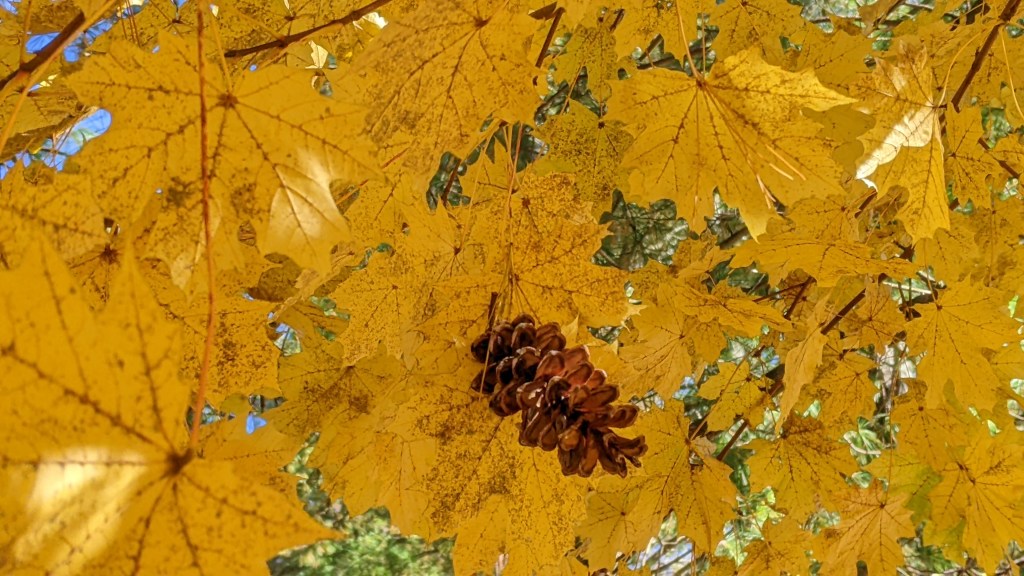
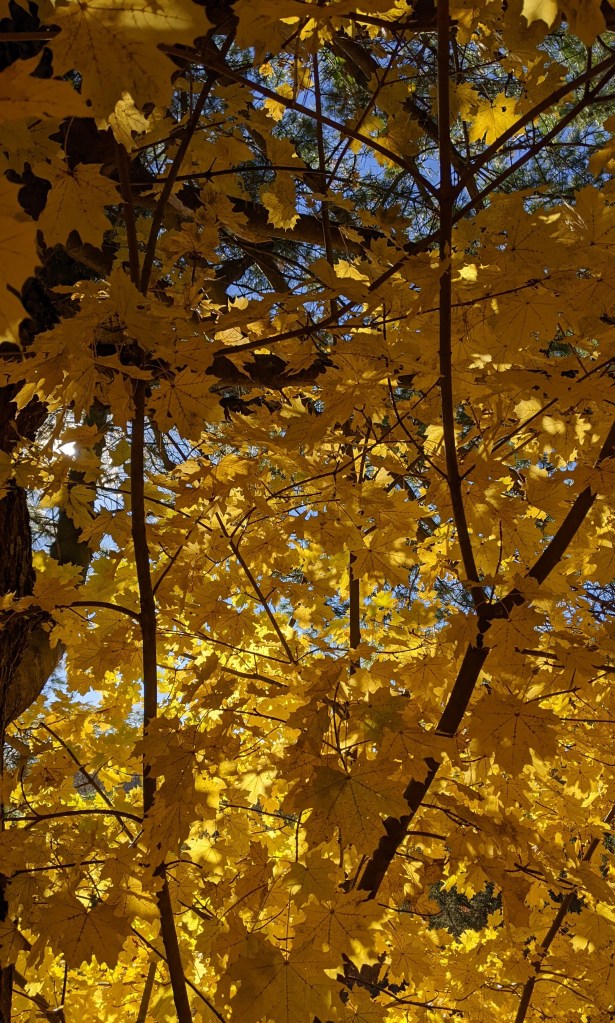
Montgomery said it best, and there’s really nothing more to add: Octobers are the absolute best and the arrival of color in the NC High Country is almost beyond words. Yellows that are deeper than any palette of oils and fire reds that burst onto the horizon — if only fall could last all year. Trying today to hang onto these colors, and this feeling.

A River Runs Through It #morningview #RockCreekPark

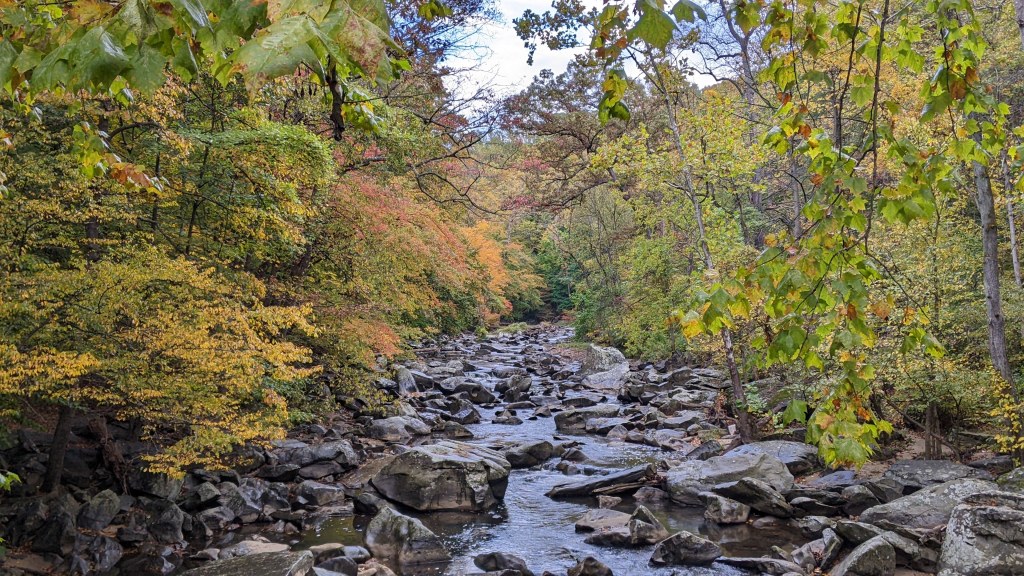
Fall has come to Rock Creek, and each fall I hear Robert Redford’s voice as we hike the trails of this national park nestled in the middle of urban DC. A River Runs Through It (based on the book of the same title by Norman Maclean) one of the best outdoor movies of all time, is where Redford’s voice originates — the timbre of his voice and its slowly undulating storytelling phrasing, is that of fall — the story of autumn slowly unwinds from the lush green of summer to reveal hidden colors and valleys that summer masks with its humidity. Most everything I know of storytelling comes from Robert Redford voice — pacing, deeply descriptive language, emotion, painting — listening to his voice in River will have you ready to buy your first fishing pole and metronome (or hiking poles too) and head to the woods in wool trousers. For fall, I highly recommend watching, but mostly listening to River — and seeing where you feet on the dream of autumn will take you.

6-Minute Scene #whyIwrite #nationaldayonwriting #morningview @NCTE

Last Friday in celebration of the National Day on Writing, I hosted one of three live/online workshops for my university’s first ever #whyIwrite event. Each workshop (creative nonfiction -me, poetry, environmental writing) was a flash: 30 minutes including guidance on what to write, writing, sharing.

For my session, students worked with the last photo on their phone to write as descriptively as possible the scene of the photo which could include background details that led to the photo as well as the scene unfolding in the photo. My own example below. Tip for students: this is a great exercise to break writer’s anxiety/block.

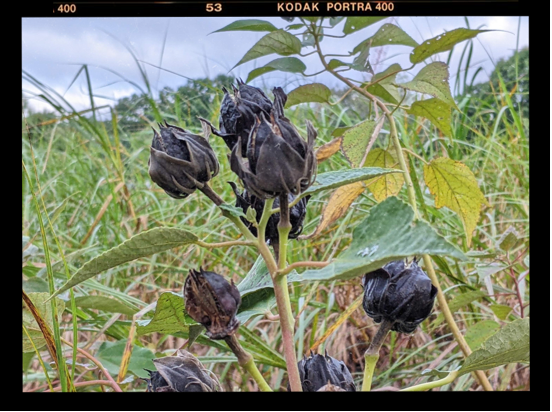
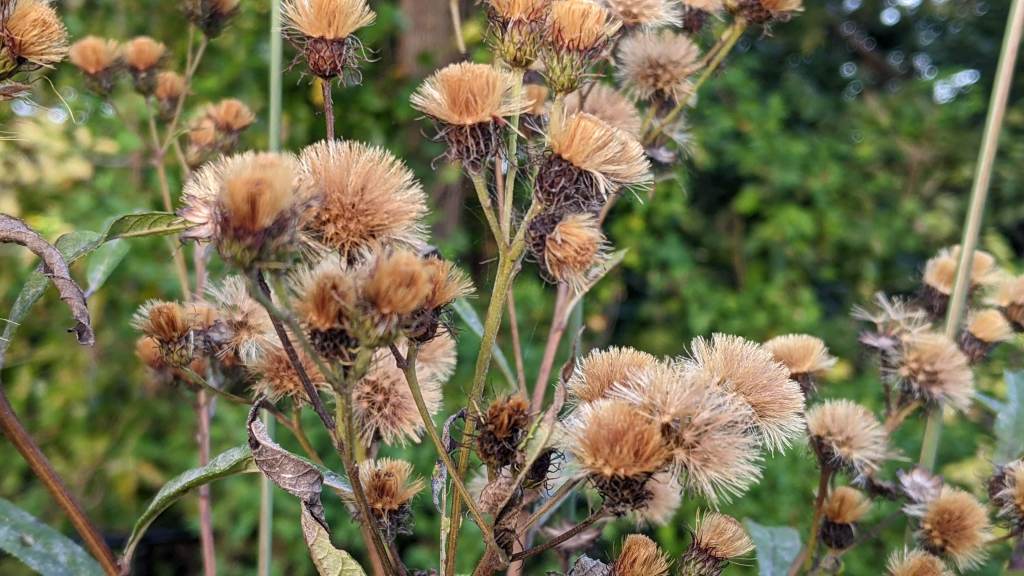
The air that was laden with humidity just days ago is finally crisp – it’s possible to move freely now outside without the weight of heat-filled water pressing down on my scalp. Today, my cheeks feel the tiny pricks of the wind that keep my face and head cool as I walk at a faster clip up the hill than I’ve been able to do in months. Darkened seed pods greet me on my approach that just days ago held the only wisp of summer flowers to grace this red mud hill. The wind carries the whistle of an oncoming train but I knew it was near before – the wind carries too the aging roasted and burnt tar of railroad ties before I turned this corner. The train rushes in on its way through town, blowing, as if those of us on the trail might leap down – the hawks, pigeons and waterlings scurry away in fright at the depth of the engines bluster and seemingly endless chugging, the humans not so much. We are unphased – the speed and dust kicked up by the engine’s pull cause these remaining seed pods to stir, but not drop, clinging to the best of seasons, for a little while to come.

Deciduous & Muddy #morningview #cherryblossoms #DCHistory

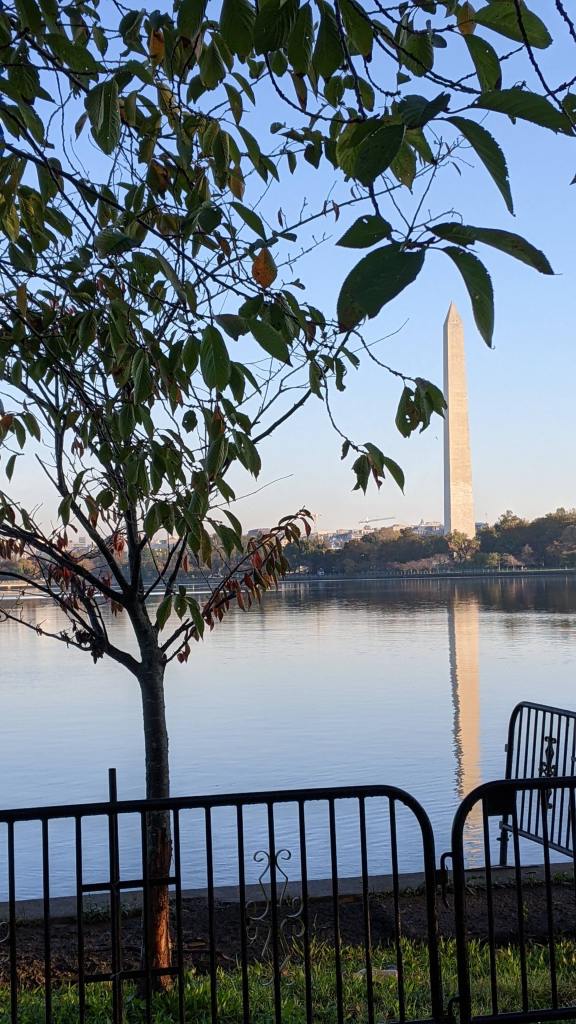
The history of DC’s cherry trees is fairly well known, but the story of how these trees must be protected and cared for, probably less so. To add to the complexity of preserving these aging trees, their micro-environment here at the Tidal Basin is fraught with peril. The land around the basin is slowly sinking while sea levels rise, and today it’s nearly equilibrium as sidewalks surrounding the basin as well as the soil to which these delicate trees cling, are often flooded. Add in the torrential storms that pass through the region, along with upper Potomac run-off that speeds toward the Atlantic from the Blue Ridge and suddenly using the word “peril” doesn’t seem extreme.

The beauty of the trees draws visitors from around the globe and I’ll be the first to admit, there is something about this natural display of pink cotton balls that has me on blossom watch too — and I too, like so many, feel drawn to be part of the festivities. It’s not only the natural explosion of color, it’s the participatory nature of the blooms — the cooperation, the friendliness, the seeing people from all walks join in conversation — all because of these blossoms. But then, the blossoms wither, and next thing I know, humidity is bursting onto the scene and we are left with the hordes of school groups that descend and no one seems to care much for the less than glorious green leaves of summer, or the deciduous scrawniness of fall. Or more importantly, the floods that leave walkers and runners clinging to the sides of the basin.

This is the real story of the tidal basin: we love it when we love it (much like any natural environment), but when we’re not in it, we cease to give it a second glance. So true is our approach to climate change, rising seas, and all that goes along with this perilous issues — our lack of a backward glance drives these changes. I would never propose to know the path forward, but I do know which paths become impassible without change — today, we’re in the mud, but to preserve beauty, simply moving to higher ground is no longer enough.

The Vocabulary of Publishing #morningview #mfa

This week in my MFA publishing course we’ve been studying words — not writing words, but words specific to the world of publishing. As someone who studied linguistics, I’m torn between how to describe this new vocabulary. Is it jargon? Is it a lexicon? Is it terminology? My best assessment is that it is a little bit of all of these. In reading over lists of words, many of which would be familiar in non-publishing contexts, we were to write about and reflect upon unknown words or phrases and how these may impact or have a place on our writer’s path. Because I often think in poetic frame, my first thought was to create a haiku with these words and phrases.

Black swan, long tail, DAD

Backlist, ONIX, remainder

Colophon, frontpiece.

Against-the-grain, bulk

Earn-out, card deck, leasing, floor

Single-title-author plan.

Preprint, mobi, slush

Back matter, EAN, PPB

Midlist, sweet spot, yeah!

In putting this haiku together, I did aim for the word that I’m most drawn to as I think it is perhaps what I am aiming for: midlist. From the American Association of Publisher’s list of commonly used terms, midlist refers to, “Books with a strong intellectual or artistic bent which have a chance of significant success but are not assumed likely bestsellers.” The last line of my haiku illustrates how I feel about this term: sweet spot. Yes, it would be lovely, gratifying and all those similar feeling words to have a best seller. But in reality, I’m not even aiming for that in undertaking an MFA and this year-long study of publishing. My sweet spot is intellectual writing, with an artful leaning. Whatever I’m writing I know has a pretty good chance of being successful as I define it (a constantly evolving evaluation). Aiming for midlist feels attainable. Accomplishable; in a publisher’s catalog, perhaps in the poetry or monograph section, maybe memoir and maybe in that special section of mash-ups that cross all of those areas. Browsing Politics and Prose’s shelves last weekend showed there are plenty of books that fall into this mushy area: some art, some prose, not on the front shelves, but not in the clearance section either. Solidly midlist.

Learning the publishing side of words can feel a bit daunting — from the language to the layers of the business; it’s hard to imagine at this stage ever being fully versed in this language when I’m already fluent in two other vocabularies of business (higher education teaching and nonprofit management). On this too, after a week of pouring over lists of words, I think “midlist” is the spot to aim here as well: aim for high middle, narrow down the focus, work to apply other vocabularies to the learning to create yet another mash-up.

Recently Published: Gowns for the Angels @SadGirlDiaries

My creative nonfiction essay, Gowns for the Angels was recently published in the online magazine, Sad Girl Diaries.

If you have a wedding dress gathering dust in your closet, under the bed in a tote like mine was, or in some sort of preservative paper — I encourage you to donate your gown to help grieving families.

Below are several organizations doing this important work and there are many more out there with seamstresses (often nurses) crafting these burial garments. Often supplies are needed as well: threads, ribbons, etc. Reaching out to your local hospital can help you to find local resources as well. Please note: seamstresses and those working to bring these garments to life are volunteers.

NICU Helping Hands

Emma and Evan Foundation

Angel Babies

Sweet Grace Gowns

Kennedys Angel Gowns

To view angel gowns, Pinterest has many that have been designed by seamstresses from around the world. Patterns are also easily findable via Pinterest.

Grey Skies and Mist #morningview #REI #getoutside

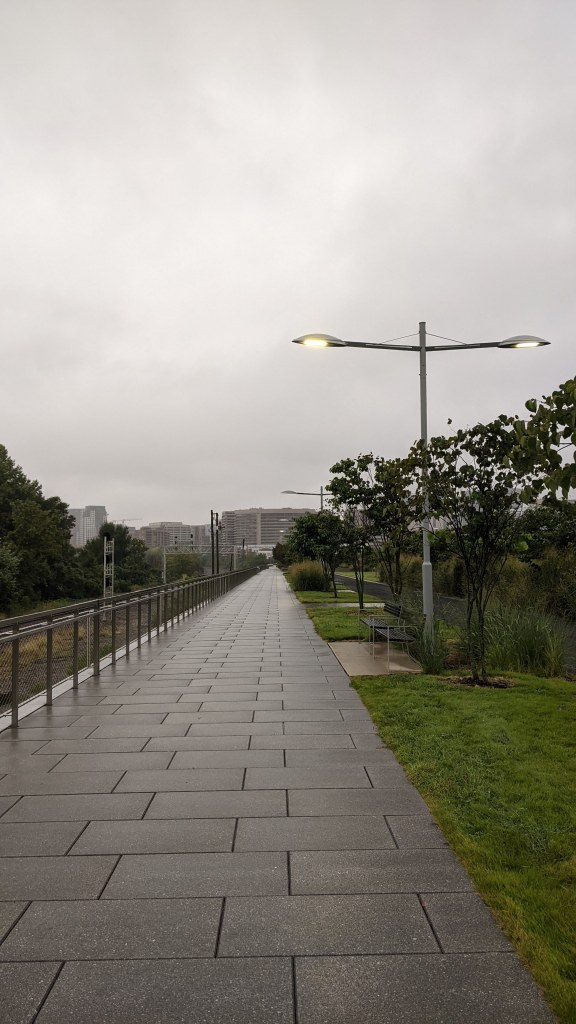
When you wake up at the weather app says it’s only 59 degrees, it is a feeling of pure joy; just two weeks ago it was easily 89 with 100% humidity just after the sun rises. On this glorious day to come, it looks as if the sun may not ever peek through and after a blistering, sweltering summer it is absolute relief to be outside — in a raincoat — walking at a fast clip without streams of sweat rolling down our faces.

Just the day before we purchased new raincoats at REI (member sale weekend – wahoo!). The tag in these Rainier model coats, a coincidental prediction of weather to come boldly states, “Get outside like you’re from Seattle.” When we were standing in line to purchase these, we wondered aloud to each other — well, we are from Seattle originally, shouldn’t we get a extra discount? As a member my entire adult life, which I obtained at the original REI warehouse store on Seattle’s Capitol Hill, I do think I should probably be eligible for some sort of “extra” to celebrate my longevity and devotion. Those original wood plank floors and bins of wool hats and gloves with skis hanging from the rafters were an REI far from its look of today — the scrappiness is missing. Maybe I’m not scrappy anymore either, and maybe that should be okay (but it’s not, really).

There is great value in scrappy and grey — it is not the languish or morbidity of heat, nor the shock of freeze that can paralyze — scrappy and grey is movement. Movement toward something, away from something, into something — the breadth and depth of a fog that reveals, or a tidal bump that offers a nudge. Grey and scrappy is to set the mind free through an afternoon of sketching or reading; it is also the creative big that bites and leads to discovery.

Grey mist doesn’t slow one down, it just requires the right layers to move ahead: scrappy power.

New BFFs: Names TBD #morningview #nationalmall #nationalmalltrust

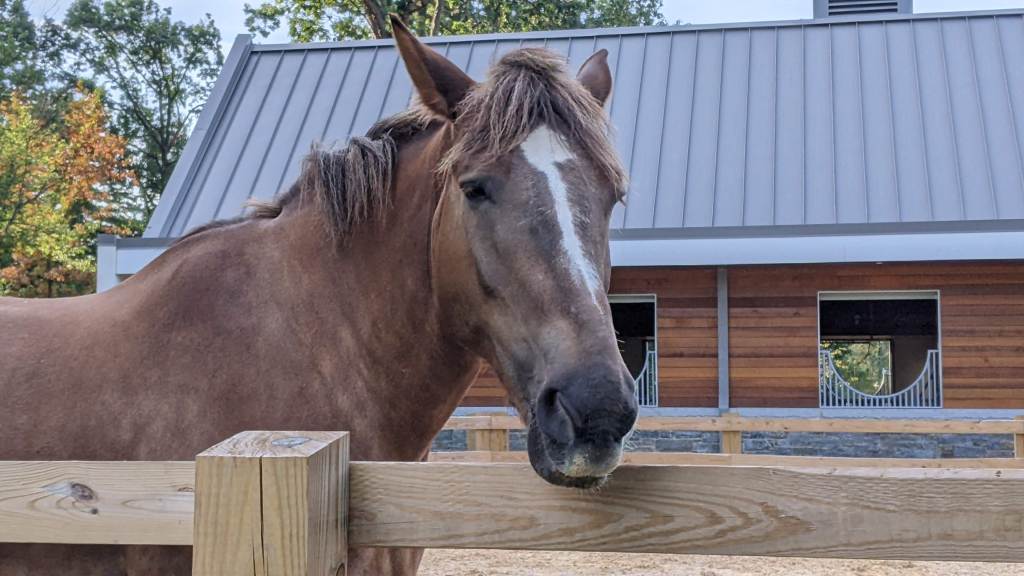
Recently completed, the new stables on The Mall for the Park Police horses is part of one of our regular morning routes. In the last couple of weeks, we’ve been able to view the horses hanging their heads outside their stable enclosures but on this day, the horses were outside in their paddock. While we don’t know their actual names (we need to get inside when the education center is open to find out these details), we’ve named them ourselves after the hosts of our most recent favorite show on PBS, People of the North: Arne, Frida and Stig — as stoic Norwegians with a glint in their eyes of humor that often only they (or other Nordics) understand, these names seem fitting for our new horse friends as their demeanor is just that, stoic, on these early morning meetups or they may slowly bat their eyelashes at us in recognition of our presence. But their presence, fully themselves, is that of quiet ponderance that they bear the heavy burden of protecting, but that their glee is hidden deep behind their voluminous chocolatey eyes.

I grew up with the Black Stallion and other horse fiction, but never became a horse girl — it was so far away from any possibility that I never dreamed of riding, visiting or owning such an animal ever in my life. I’ve known friends with horses, and I have a friend now that raises ponies in Maine far from the reaches of our city lights here in DC. Now that we are regularly visiting our new friends though I wonder — could I become a horse person at midlife? Is that possible? Their demeanor has an instant calming effect most certainly — they can hold a stare like no other animal I’ve met, and they seem to listen to my questions — though much like dogs, I don’t think they have any intention of answering me, or doing as I ask. But they listen, and stand, and look — sometimes casting their gaze away to swish away an annoyance, but then they look back and acknowledge that I’m still standing there waiting for their acknowledgement. Perhaps we can be stoic together.

Fall Arrives #morningview #longbridge

The humidity snapped: we never think it will happen and then magically it does. Hoodies, sweaters, long sleeves and jeans all come popping out of the caverns these have been stuffed into. We walk outside and can actually breathe freely, not hesitatingly, not haltingly as we must through the exhaustion of constant heavy air — we can actually move in this air that does not wear us down and wear us out within minutes. The fall is when we begin to feel alive after the drudgery that is summer here: we can greet the day with some level of joy and yet still enjoy an iced coffee on the sidewalk (in our hoodies).

John Keats wrote “To Autumn” September 19, 1819 and the first stanza in particular speaks to all the glory that is this season — the best season.

To Autumn (first stanza here, link to complete poem)

Season of mists and mellow fruitfulness,

Close bosom-friend of the maturing sun;

Conspiring with him how to load and bless

With fruit the vines that round the thatch-eves run;

To bend with apples the moss’d cottage-trees,

And fill all fruit with ripeness to the core;

To swell the gourd, and plump the hazel shells

With a sweet kernel; to set budding more,

And still more, later flowers for the bees,

Until they think warm days will never cease,

For summer has o’er-brimm’d their clammy cells.

Name Changes, Patina Remains #morningview #15thStreetHistory

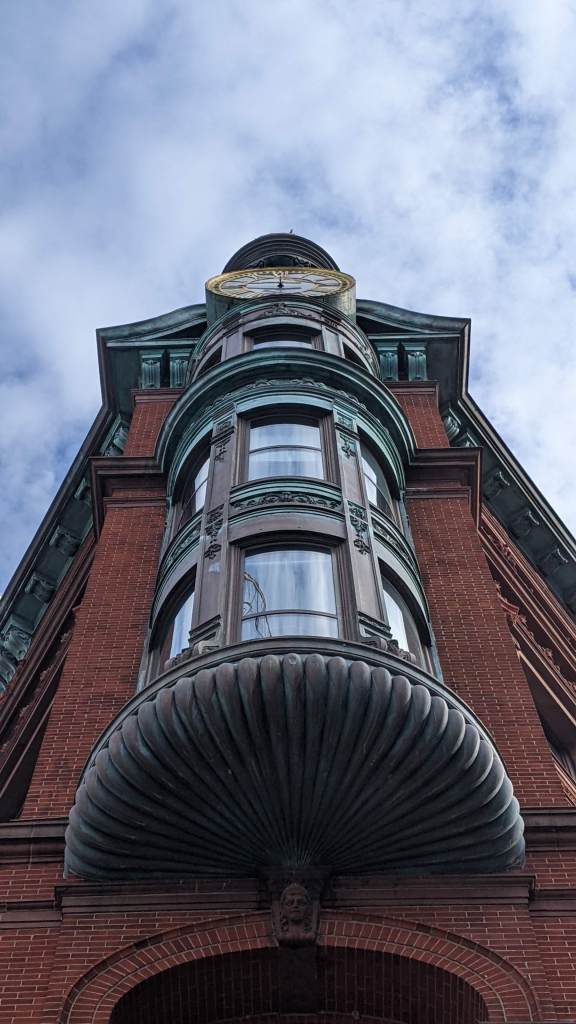
The 15th Street Historic District, located just steps from the White House and The Mall, is most likely overlooked by most that visit downtown DC. This corridor aligns and in some cases facades face, the historic Treasury building in Beaux Arts and Queen Anne styles. The photo here, the former National Savings and Trust Bank (now Truist), anchors the corner of 15th and Pennsylvania — its windows keeping solid watch in roundabout fashion toward the southwest and southeast, a day and night watch on an ever challenging streetscape.

Guarding this corner since 1888, it is hard to grasp the sheer number of people that have entered its doors, worked inside, and passed by on its sidewalks. Riots, protests, government shutdowns, pandemics; digging of Metro tunnels, motorcades, inaugurations and funeral processions — all have passed within site of these windows and those that look down to the streetscape from the comfort of being behind the glass. The stoner skateboarder kids clack and crack over the words of Walt Whitman, “Never, til the capital had cost the life of the beautiful and the brave of our land , did it become to the heart of the American citizen” and Frederick Douglass, “Washington has certainly an air of more magnificence than any other American town. It is mean in detail, but the outline has a certain grandeur about it.”

The windows see it all — and hold it all, the words, the clacks and cracks surrounded by a protective glaze of age– perhaps these windows are the heart of Washington: names (and allegiances change), while patina shines despite the rains and hardships that any window must endure.

Rails, Planes, Bridges #morningview #longbridge #neverforget

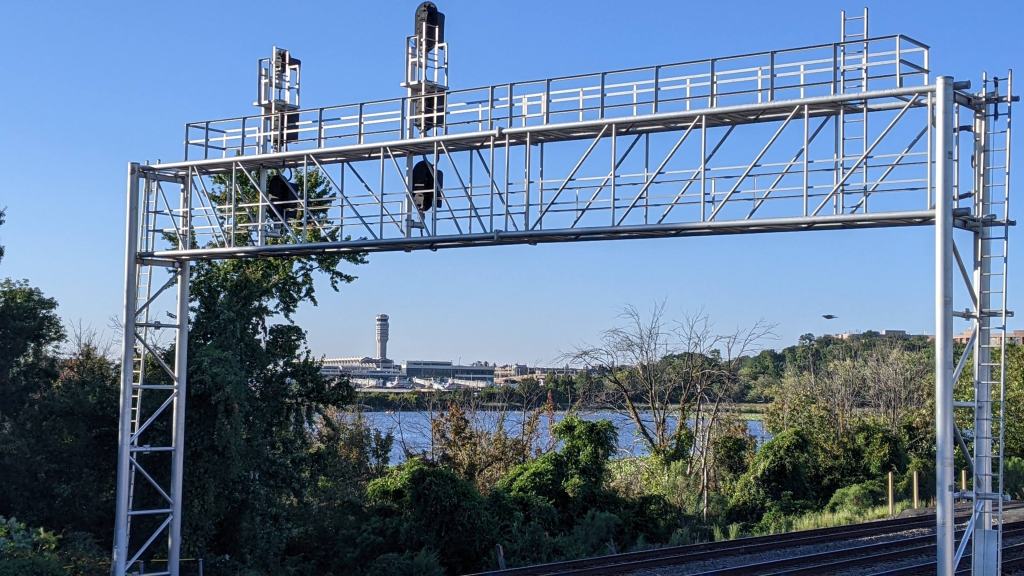
Since 1808 the area known as Long Bridge has connected the Virginia side of the Potomac to the D.C. side of the Potomac; historically, this area was part of the capital city but was ceded back to Virginia pre-Civil War. A quick Google will turn up facts such as the history of the foot bridge here where rates were different for foot-only, or person plus horse traffic, and sheep or pigs. Today, freight and commuter trains roll by while planes take off nearly every minute from National Airport (as a long-timer here I do not call this airport by its current name). This week on one of the first not excruciating days of September, the skies are blue and clear — no humidity haze hangs on our heads as we walk and watch the human and nature made transportation soar and roar past us.

This particular week of September always feels compressed: the weather is finally changing, the sky is clearing but there are memories and sadness that lead to the compressed feeling compared to the expansiveness that next week will bring with the seasonal changes. Twenty-two years ago, September mornings started much the same as this one – clear blue skies, beautiful temperatures to meet the sunrise – a fall day full of hope. And smoke. And jet fuel. And destruction. And words that still do not full express the trauma of living near, and with terror. Here on this path, in the shadow of the Pentagon and its breach, I always feel that we live in one of the safest places in the world — we know the sounds of various types of helicopters, to look for the signs — a silent sky is not a friendly sky. It’s hard to think of the losses that are ever-present in hearts and minds. On this day, there is peace on these banks. The seabirds fly, the squirrels frantically dart and the day goes on as any other early fall day might, except for the memories.

Accomplished #bostonmfa #morningview (a few weeks ago)

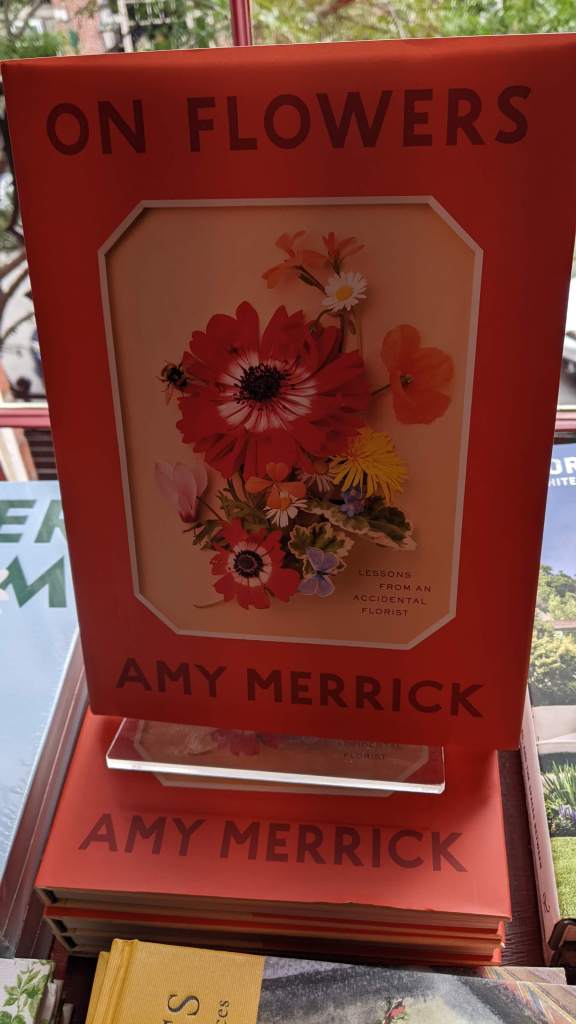
On Flowers by Amy Merrick is a book I spotted recently at Boston’s Museum of Fine Arts — I didn’t want to carry the hardback home on the train so it’s on my wishlist for two reasons: it is beautiful and it is a great model for the type of writing I want to do.

I’m in my second year of an MFA program, which some in my world already know (but many do not). I considered heading down this road for years and here I am, right in the middle of the process. A current class I’m taking has me finally focusing on my blog, and investigating my thoughts about what being a writer means to me. Today, this road takes me to what it means to be accomplished, where this program has taken me so far (and where I hope it will go) and the differences and overlap between successful and accomplished.

What does being accomplished mean to me? I felt that before I addressed this question, I needed to know more about the word and its roots as in usage, accomplished is heaped with emotion and I wanted to remove that element to begin my thoughts. From the Oxford English Dictionary, the etymology of accomplish dates back to the 13th century Italian, Spanish, Catalan and Old Occitan (had to look this one up = historical Romance language leading to lyric poetry). Two definitions from the OED standout to me: To fulfil, perform, or carry out successfully (an undertaking, desire, request, etc.); to achieve (one’s object) and to make complete or perfect; to fit out or equip. This definition I found to be worth more consideration, though the OED states it is no longer common usage: To complete, spend, or pass (a period of time); to reach (a certain age). Accomplished to me is a combination of all of these definitions: a completed body of work, a completed course of desired action, achievements of my own definition and to spend periods of time working toward my desired body of work. I try, to varying degrees, to hold to these ideas as I know what I have accomplished to date, and will in the future, as these values are intrinsic — what I consider accomplished may not meet the definition of external forces (though acceptance and accolades are two things I certainly want).

In what ways have you become more accomplished during the course of this program? Now that I’m in my second year, I find the rearview on year one to be one that I absolutely treasure for the change it brought to my life in so many ways: from my ability to start and maintain my countenance and momentum through incredibly trying times to finding my lost writing voice. This is not to say that at times (many) I wondered how I could ever balance this commitment; but I did move through each step because it quickly became apparent that this program is about me and work that I produce is for myself (and readers one day), not work in service to others. These may sound like intangible accomplishments, but to me these are rock solid as I move into a new phase of my life. On the more tangible side, consistency in writing is a major accomplishment, that has led to production — this is one aspect I had hoped to gain by going into this program.

Is there a connection between being an accomplished writer and a published writer? Tricky question. I’ve known many accomplished writers over my life and their work might be buried in government reports, association magazines or bundles of letters — but these writers are not published in the way we might usually think of it. We all want to be published writers, and I think there are many routes to publication — I would love a best seller just like every writer, and I hate rejection emails just like every writer — but I know I’ll feel the most joy if I’m producing work that I feel good about and it finds its way to the right publication for the work. One great aspect of this course in publishing so far is expanding my own thoughts on avenues — some of which I already knew about but hadn’t put the “publishing lens” to before. Yes, I would love to publish my thesis in book form and have it reach readers that find it meaningful.

Is there a difference between being successful and accomplished as a writer? Yes. Success also has many layers to it and definitions society ascribes to it that make it something of a minefield to me. There are bestsellers that I will never understand and cannot get through; and plenty of essays that feel like gibberish from successful writers. There are many accomplished writers that put in all the elements that could lead to a bestseller, but never attain that ranking — so in many ways success can be artificial. I think this one really depends on how we define success for ourselves. I used to think I would love to give up my day job (currently teaching English to college students) and write as my main activity/income generator — but now I’m not so sure; yes, I would like to write and also earn from that, but I also know I need different inputs and I have a lifetime of skills that I want to and should use as well. Moving toward a more writing-friendly day job is certainly in the forefront of my mind as I write this post (teaching composition doesn’t mean the composition professor has a ton of brain cells left over for her own creative work each day). To wrap-up: yes, there can be, should be, and are differences between successful and accomplished but these don’t necessarily need to be in separate silos — there should be cross-over on this winding path.

Train in the Window #morningview

My view from the treadmill today — a Virginia Railway Express train headed rapidly toward downtown. The heat is excruciating today, at 85 degrees at 7:30 am. This heat often leads to train slowdowns as the rails buckle from the hothouse humidity of the air coupled with the intense friction from train speed — but this driver seems determined to make the schedule, which I admire from a punctuality standpoint (and former train commuter) but from my perch inside this wonderfully chilled community center gym, I silently wish for safe delivery of all passengers.

Just before this commuter train whizzed into view, the longest freight train I’ve ever seen in the city ambled by at a speed of no more than 20 mph — each car swaying in waltzing fashion slightly to and fro, frame in-tact, but timid in approach. As my footfalls caused me to start feeling the sweat and I turned on the extra fan on the treadmill’s dashboard, I wondered how it comes to be that toxic chemical containers on freight trains are situated right next to newer cars with eco-friendly bamboo floors. How do all of these co-mingled things live side-by-side for endless miles, couple and uncouple, to land products on the shelves of Target stores near and far?

Trains: transportation of people and goods, and the truest view of the world.

The Quiet Memorial #morningview

Memorial to Washington, DC residents that served in WWI

February 8

Just off to the side of the well-traversed pathways leading to and from the Lincoln Memorial, rests a memorial to those DC residents that lost their lives in World War I. Press cameras don’t set-up here, crowds don’t protest here but we’ve seen several weddings and numerous engagement photo shoots here over the last few months (including one with the wedding party dressed as super heroes).

Perhaps it’s the quiet of this spot, wedged in between protest alley and the windy speeds on Independence Avenue from Hill workers roaring by, that draws the newly in-love and those ready to commit. Perhaps it’s the aura of honor and dedication that radiates from the patinaed dome to the glow that emanates from within as the sun bounces off the well-worn marble. Perhaps it’s just logistics — it is resounding beauty in a beloved city, with easy parking across the street at the MLK, where one can celebrate for a few moments without a crush of other humans from places near and far.

Iceberg Ahead! #morningview

February 4

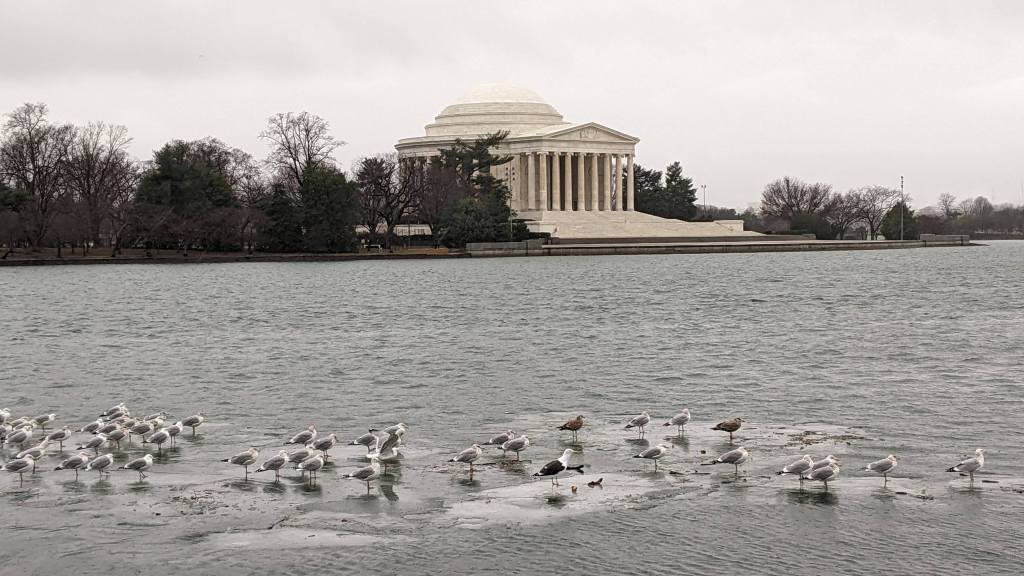
These seagulls found the last remaining ice floating on the Tidal Basin for a rest and some fishing. It may be tough to see but one of our gull friends had just plucked a live catfish out for breakfast — only to find the gulls from each side of the iceberg jumping onto his part of the berg, casting the whole flotilla to begin drifting precariously toward the sea wall. While we didn’t wait for the crash, we did observe that these squawking friends appeared unconcerned even though their perch was about to slam into a decaying concrete wall. Their eyes only see the sky above, when their beaks are not pecking frenetically into their subdued prey. Within weeks, this scene will burst with a frenzy of pink blossoms; but grey washes out all color — grey sky, grey water, grey birds.

The Jefferson in the Mist #morningview

Late last fall I began posting photos on Instagram with the tag #morning view. Every morning we head out for a hike or long walk to start the day with clear minds, and check-in on the characters that we’ve grown accustomed to on these treks.

But at some point over the last month, as I struggle to write anything but lesson plans it occurred to me that my material was obvious: #morningview needed a plan too. Since we’ve been unable to travel during the Pandemic, our roaming has and continues to be much closer to home than usual — but the amount of material within 50 miles of home is immense. So I thought to myself maybe I should write what I see everyday, instead of waiting for those bigger trips; it’s rare a day goes by that I don’t take at least one photo so here we go. For now, I’ll start where we are and work backward to the beginning of the year. Fingers crossed, this project will have a bigger purpose soon.

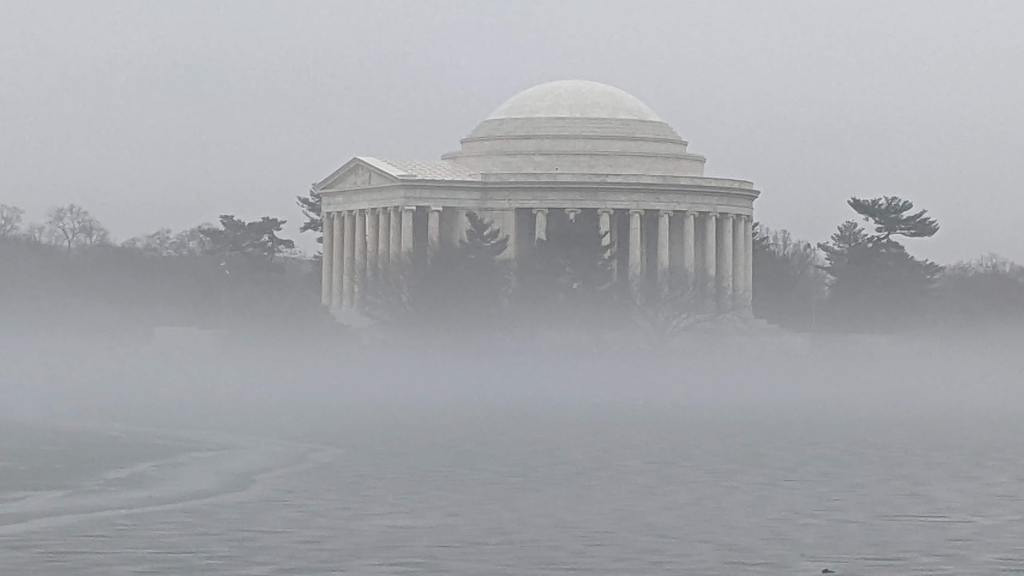
Jefferson in the Mist: February 3. Freezing fog, ice on the Tidal Basin.

Cold and damp to the bone day, but hovering around freezing as we head out for this trek. Some days we have a particular route we want to take on these outings, or a particular goal. For this day, it was all about capturing the fog as best we could as it hovered on top of the monuments. It’s easy to see the the swirling and shifting patterns in the ice – that moment, or many moments over the last few weeks where time stood still and this usually fluctuating basin for the Potomac and snapped it into place. For weeks on end the water moves with the tides that roar up and down the Potomac; but for now time is suspended while the sheet of ice captures all that moves.

Dense fog encircled the Jefferson on this day and I think back to a few times I’ve been stuck in airports due to freezing fog like this — because it’s hard to hear the usual soaring upward roar of jets taking off from nearby National Airport (I will always use the original name). Jets may well be taking off for that sunshine above the clouds, but silence reigns on this day. Our usual helicopter friends from Marine One to Eagle One and news choppers are also silent – no whirring, thwap thwap just above the tree-line, as visibility is below zero. On this day, silence is omnipresent – except for our shrieking at the awesomeness of the ice (wishing we had some sticks to poke it) and witnessing the suspension of time.

Season of Rebirth: Burning Man Temple and Calatrava’s Oculus

On the the blessings of living in the megalopolis of the DC to NYC corridor is the possibility of visiting beautiful sites mere hours of days apart. On Christmas, the opportunity presented to visit Calatrava’s Oculuson the World Trade Center site and just days later, the Best’s Temple for Burning Man at the Renwick. While I didn’t seek out each site for any sort of spiritual experience, both left me with pause given we are working through the season of rebirth, renewal — and new beginnings.

The Temple as well as the Oculus honor those that we mourn and desire and the eyes are naturally drawn skyward — which for the Oculus brings a rush and multitude of layered memory. Calatrava’s soaring design is meant to embody just that — a bird flying from the hand of a child. The innocence of that image is felt — and the color in the evening, resembles the sky on that day most of us remember clearly — a day that started like most other fall days. The bird metaphor embodied in the design, one can hope is that the spirits of those lost are now free and while evil struck, a return to innocence is possible.

For the Temple, the fresh and fragrant smell of balsa wood also elludes to hope, while reverent lighting provides a moment of heavenly breath. Visitors’ messages to loved ones link the Temple to the site of the Oculus where messages were left for days and months after the fall of the Towers — perhaps it is the written word that provides a moment of renewal in our belief that those we love are not truly gone from our grasp — that memories are closer than we think.

While the Temple is set to come down on January 5, there are still a few days left to experience the installation but the Oculus offers a permanent destination for reflection.

Out with 19 in with 20


Growing up, I heard repeatedly that whatever you were doing at midnight on December 31st would set your path for the year. When added to the fact that I was born on January 1st, the amount of pressure auto-built into those two days was immense, literally from day one. Then I decided to get married on December 31 as well (it seemed celebratory at the time), and it’s a complete pressure cooker. Not to mention, most of my favorite restaurants are closed on New Year’s Day.

Now that I am solidly in middle age, I still feel this trifecta of the holiday squeeze. We’ve tried to move any celebration, minimal as it is, of our anniversary away from the end of the year landmark which is a step. For New Year’s Day, it’s best to focus on what is available — though since we no longer imbibe, and sobriety is now for the cool kids, it does seem a tad ridiculous that there is such a long list of closures on the first day of the year.

Taking all this into account, my truisms for ending this past year should serve me well into this new year as well.

  1. Rely on Asian restaurants – always. Chinese, Thai, Indian — have several favorites and one is bound to be open on January 1 (much like Christmas). This year, City Lights of China in Dupont Circle opened right on time at 11:30 am — just in time for brunch with friends. Next, rely on tried and true institutions — there will always be a museum open, somewhere close by. This year time at the Renwick Gallery, the Smithsonian’s American Art Museum — and the piece above reminds me of my own olden days of New Years gone by on the town (Karen LaMonte’s Reclining Dress).
  2. Stick to the basics when it comes to activities — what do you really love? What is the one place that offers solace? For me, it’s the East Potomac Golf Course. It’s where I met my husband, played endless rounds with friends in my 20’s and it’s where my kiddo had her first golf lesson. It’s no country club, but it is gold. We really should’ve gotten married here.
  3. Midnight — well that’s all bonk. On the years I’ve been fast asleep it didn’t predestine me to great sleep the following year; the years I’ve been out late champagne-ing with friends didn’t necessarily predict a year filled with bubbles. Now we hygge on the last night of the year — carpet camp-out, appetizers from Trader Joe’s and possibly too much pie. This year, I did forget to light our TJ cedar candles; and don’t think I don’t miss black dresses, stockings with runs and the champagne — because I really do and I hope this kind of celebration circles back. But for now, it’s hygge.
  4. I am not too old. For all of us at midlife, squeezed between generations, career changes and concerns over college savings it is completely daunting most days to figure out how to get all the laundry done and ponder anything new. My own vow (not resolution, I don’t believe in those) is to remember every day that I am not too old to have what I truly want whether it’s a PhD or a book deal — it’s all about the focus and most importantly, eliminating obstacles. A fresh decade awaits – as Oprah famously mentioned several years ago — we’re going to be 50 (or any other age) regardless.


Between seasons…

img_20191114_081958


“Teach this poem” lands in my inbox early each morning thanks to Poets.org. As the cold bears down on us here in the East, and while the clock may indicate that day should break soon, clearly even the sun is desirous of hibernation. As I click on my sunlamp, I am yet surrounded by the sights and sounds of darkness. Joon’s poem, “Between Autumn Equinox and Winter Solstice, Today,” today’s “Teach” installment offers a new way to think of the cold — wear it. As I ponder which coat to wear on my afternoon trip North, I will think of the cold as something I wear — like the season — but unlike one character within the poem that says the cold has “broken his windows,” I will wear my cold with joy, for it is the season I love the most.

Between Autumn Equinox and Winter Solstice, Today

Emily Jungmin Yoon

I read a Korean poem
with the line “Today you are the youngest
you will ever be.” Today I am the oldest
I have been. Today we drink
buckwheat tea. Today I have heat
in my apartment. Today I think
about the word chada in Korean.
It means cold. It means to be filled with.
It means to kickTo wear. Today we’re worn.
Today you wear the cold. Your chilled skin.
My heart kicks on my skin. Someone said
winter has broken his windows. The heat inside
and the cold outside sent lightning across glass.
Today my heart wears you like curtains. Today
it fills with you. The window in my room
is full of leaves ready to fall. Chada, you say. It’s tea.
We drink. It is cold outside.

Thank you Poets.org for this winter discovery of Emily Jungmin Yoon.

There’s a certain slant of light

Only Emily could describe the onset of winter so perfectly.

There’s a certain slant of light – Emily Dickinson

There’s a certain Slant of light,
Winter Afternoons –
That oppresses, like the Heft
Of Cathedral Tunes –
Heavenly Hurt, it gives us –
We can find no scar,
But internal difference –
Where the Meanings, are –
None may teach it – Any –
‘Tis the seal Despair –
An imperial affliction
Sent us of the Air –
When it comes, the Landscape listens –
Shadows – hold their breath –
When it goes, ’tis like the Distance
On the look of Death –


August: Heat, Humidity, Escape

Summer in the DC area can be described in one word: stifling. It is hot, but more importantly incredibly humid. Nearly every day you can look to the horizon and see the pillar-like clouds begin to form sometime in the late afternoon — which means it’s nearly certain that a storm will race through at some point, and we’ll have to watch the sky carefully if we really want to head to the pool. On this particular August scorcher, the sky is completely covered, thunder is beginning to roll in the background and the columns of spiky storm clouds are gathered — it’s like the DC-summer storm trifecta. img_20190815_153952

The only thing you can do, should you be trapped in or near the city during the summer is seek out those spots that have some sort of breeze or some sort of tree cover. The gardens at Dumbarton Oaks in Georgetown provides just such a respite — lush gardens with plenty of trees, nooks and crannies to hide out in for awhile and a FREE museum that is filled with Byzantine and Pre-Columbian treasures in a remarkably well-cooled and designed space. My suggestion is to visit the garden first, sweat, and then head inside to enjoy the chilled air so that you can brace yourself for a quick run to the bus on Wisconsin Avenue before the late afternoon storm cracks its first lightening strike.

The heat may be unrelenting when walking the gardens (and picnics are prohibited), but the garden will draw you in from the Orangery (with orange trees) upon entry to the garden-of-delight swimming pool and surrounding grounds that make you wonder just whom you know that is going to have a party here that you can attend. With this beautiful thought foremost in your mind, you’ll be ready to wander down the short staircase to visually melt into the sunflower gardens — that appear at once wild, yet English in the neat rows but overgrown in a completely French manner.

img_20190815_153812-1

Escape to the flowers, even with unbearable humidity that bears down on your skin with its weight and oppression — the flowers remain hopeful. Fall is coming.


What I’ve read so far this year…

2019 is a big year — not only did I turn 50 on the first day of the year, but like everyone I know I set out to create the bucket list of things to do. And of course the list became way too long, way too fast; a simpler approach to this year was clearly in order because who wants to over-live it? Fifty is a watershed year without doubt, but I quickly realized that in the rush to stuff everything I’ve not gotten to yet, and all the things I’ve yet to conquer in just 365 days I was setting myself up for goal non-completion. Again, everyone I know is or has recently passed through this phase of mid-life as well. The solution: 50 books. So far so good, and here’s my list so far…hint: most of these can be purchase through my links to Powell’s just to the right –>I may never own my own “shop around the corner” but I can have my own little virtual shop right here.

Currently reading: Hammer’s The Badass Librarians of Timbuktu

Humor

Where’d You Go Bernadette: I just re-read this amazingly funny, sometimes poignant and omg did she ever nail every single stereotype about Seattle.

Nonfiction

Never Can Say Goodbye (compilation): For anyone that loves NYC, this is a sweet read of essays from authors that both love and hate the best city in the world.

Dunbar’s Never Caught – The Washington’s Relentless Pursuit of their Runaway Slave Ona Judge. You’ll never think of the Washington’s quite the same after reading this well-researched and written book-form documentary. Incredibly sad.

Orlean’s The Library Book: Why don’t we know more about the mysterious fire at the Los Angeles Library?

Trevor Noah’s Born a Crime: Having grown up watching the horrors of South African apartheid on television, it was odd to explain all this to my kiddo as she read this for school. Not only does Noah’s book detail his own experience, it makes you wonder how far, if at all, we’ve come. Regimes and governments may change, but so much of our world remains under siege.

Historical Fiction: My favorite genre — plenty of history, some filler, plenty of literary language.

Benedict’s Carnegie’s Maid: The tale of a young Irish girl who inadvertently becomes the maid for one of the wealthiest families in America.

Hopper’s Learning to See: Dorothea Lange. We all know the Depression-era photos, this novel offers a glimpse into her personal life and how the Depression never really left her.

Chiaverini’s The Enchantress of Numbers: Ada Lovelace — Ever wonder where computers really came from? What role did women have in mathematics in Victorian England?

Godwin’s The American Heiress: If you love Victoria, this is quite similar — but the American version with wealth, the hunt for a Duke to wed and plenty of damp English weather.

It’s clear I have a ways to go — luckily the pool is open and summer is nearly upon us. Happy Reading!

img_20190607_160844-1


On the train again…


img_20190420_120241I’m rolling into the Baltimore station yet again, and since my last trip north on the exact same train, in the quite car again, where I sat just two months ago when our train struck a human on the tracks. Since we pulled out of the last station, I’ve been head down in my book, hoping for the best — we’re cruising through Baltimore’s tunnels now and should hopefully arrive at the station without incident. For weeks after the accident, I scanned the news for mention of the poor soul that was struck – that poor woman whose life will never be the same. For now, it seems that we’re cruising slowly, and peacefully into the station.
Several questions have dogged me since that train ride in March, and all of those questions revolve around trauma. May is Mental Health Awareness month and since today is the last of the month, I find myself really pondering how we as a society can emphasize the importance of mental health check-ups. Part of the marketing campaign for the month revolves around the phrase “breaking the stigma” — which I completely support; part of breaking the stigma is turning things from oddities into routines.

For a woman to find herself on a set of train tracks — most certainly involved trauma, not just the accident, but whatever brought her to that place. Because news coverage is so weak, it is impossible to know her circumstance before or after the accident; but no one finds themselves near train tracks on a well-known busy commuter corridor in a major metropolitan area without having lived through some trauma. And what of the train driver and other staff that saw the accident yet could not prevent it? What of the first responders — who must see accidents like this on a regular basis? Trauma is all around us, yet our American culture remains steadfast in its neglect of the fact that the eyes cannot un-see, the brain cannot un-learn and the flesh cannot un-feel.

We must do more.


Mango Mango!

Having just returned to DC from NYC, with some extreme indulgences into Chinese mango chicken at Our Place, we decided to wrap up mango month with our first trip to
img_20190423_182639 Mango Mango Dessert in the amazing Eden Center. This mango ice cream sundae, with its base of mango chunks, full scoops of mango ice cream topped with mango drizzle and sweet whipped cream was beyond the fruity beyond — almost too pretty to plunge a spoon into. Nestled on the outskirts of the Eden Center, Mango Mango is a sleek dessertery that offers everything from waffles and fruit to peanut paste soup (next up on the try-it list).

The beauty of Mango Mango is this — on a steamy spring afternoon, you can pop inside (not busy in the afternoon) and indulge in not only this creamy, dreamy fruit tower but also their not-too-cold A/C. One of the best parts of Asian cuisines, to me, is the incorporation of savory and sweet — fruit with chicken and garlic, fruit pastes that incorporate red peppers for pork — and the overall prevalence of the mango. In American cooking, the mango still seems exotic yet for Asian cuisines the mango is just about everywhere — Malaysian, Thai, Vietnamese. Growing up on the West Coast, Asian restaurants were always part of our culinary vocabulary and now that we’re in the near South, it is wonderful to find these comfort foods in just about every neighborhood.

I’ve long been drawn to mangoes for their health boosting ability — their color alone is a mood booster and this dynamic yellow fruit often appears on super food lists. There are entire blogs devoted to mango love. A trusted source, the BBC, details the nutritional benefits of this delectable fruit from its vitamin content to its beneficial properties for the gut.

Health value aside — the mango is beautiful in color, texture and versatility — and readily available in summer in the U.S. But in those dark winter months…a bag of frozen from Trader Joe’s does just fine for a lovely even crisp, crunchy oatmeal top and butter to carmelize the mangoes for a tinge of chewiness. Love cobbler but don’t have any peaches? Mango cobbler is an apt substitute and just a tinge different, that here in the near South, would sure to be a $15 dessert at a newer restaurant. Warm or cold, a scosh of whipped cream on top completes the beauty of a mango dessert.

Softball Muffins

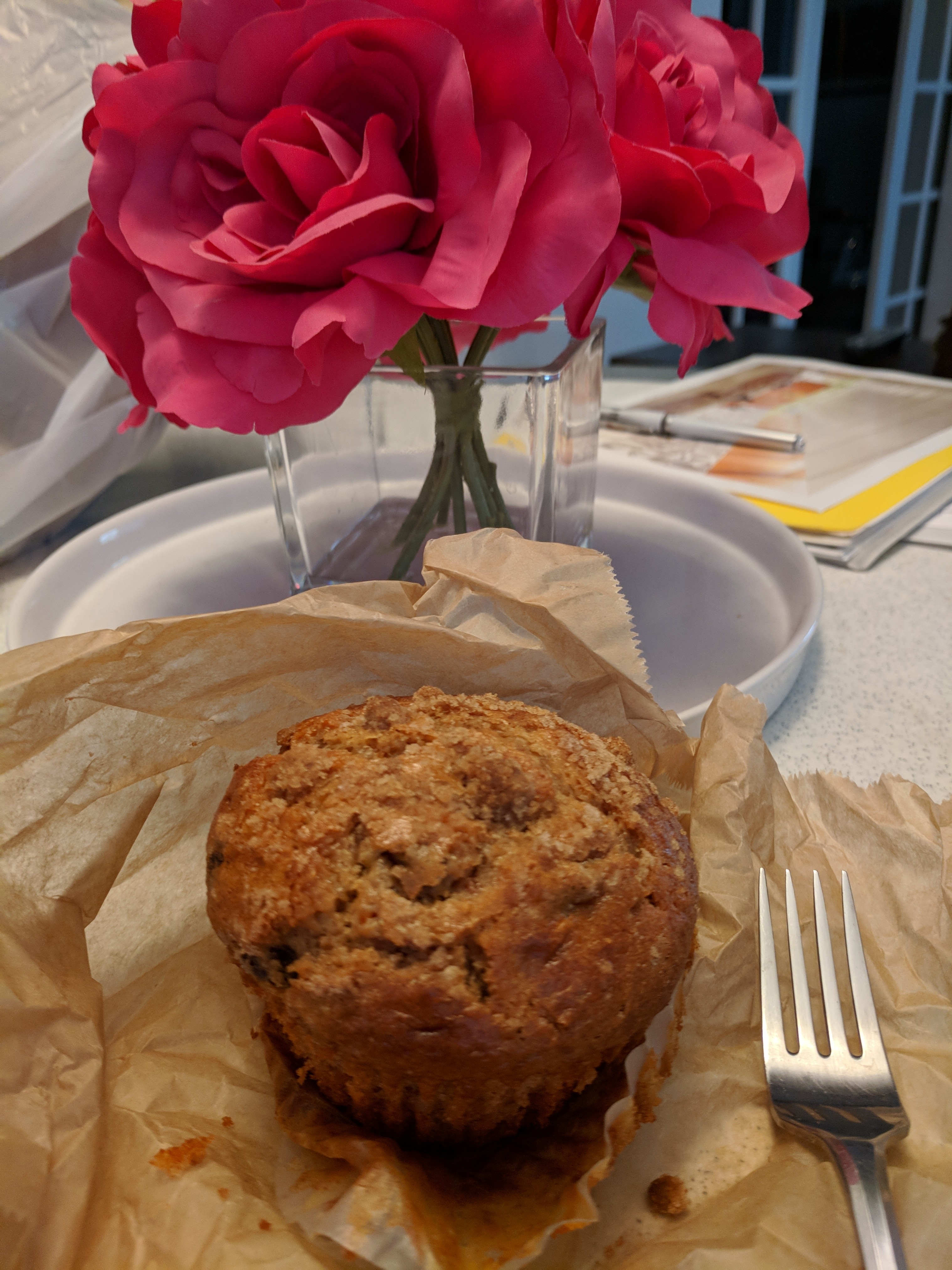
img_20190421_080832When you think of signature morning rituals in New York, bagels are what most often come to mind. But within every bagel and coffee shop, there are the others — the softball sized muffins that can be found nowhere else I’ve traveled. While these muffins rival the Costco version — these bagel-shop muffins are most often right out of the oven and lack (for the good) the Costco mass-production taste and squishy feel.
This carrot raisin muffin from H & H Bagels on 2nd Avenue is gloriously NY. It’s sturdy, carrots but not too many (as with the raisins), and a little bit spicy much like 2nd Avenue itself — a working muffin for a working avenue of uptown/downtown traffic that wakes slowly…then bam we’re off and running headlong into the day. If you get in early enough, you’ll find no lines and you can breeze in and out of H & H — much like just about any place in the City; wait too long and the line is out to the winter-weather vestibule or beyond.

The beauty of the NY muffin carries into the future — smart shoppers will pick up a weekend’s supply so that sleeping late on day two is possible. Never flat, and resistant to the deflation many baked goods suffer during a microwave spin, the NY muffin continues to stand tall like many beloved buildings that surround H & H. Perhaps this is due to the careful brown paper wrapping each muffin receives before heading out into all kinds of weather that the City dishes up, and perhaps it’s just resilience in a munchable form. Whatever the reason, the NY muffin offers a slightly sweet and textured way to start the day — while I love a hot bagel, the muffin is not just an “also there” of the bagel shop — it’s a full-fledged member of the bagel shop team.

#traintravel: the unexpected

IMG_20190311_083126I often take photos as I ride the train — I firmly believe it is the only way to see America. Road travel, unless using secondary roads, does not provide a real glimpse into America’s cities and rural areas — but even that view is limited. To get into the real America, it is essential to get into alleyways; I use this same methodology when looking for a new place to live as well — you can tell a lot about a neighborhood or town by what you can find in any given alleyway, be it trash or gardens.

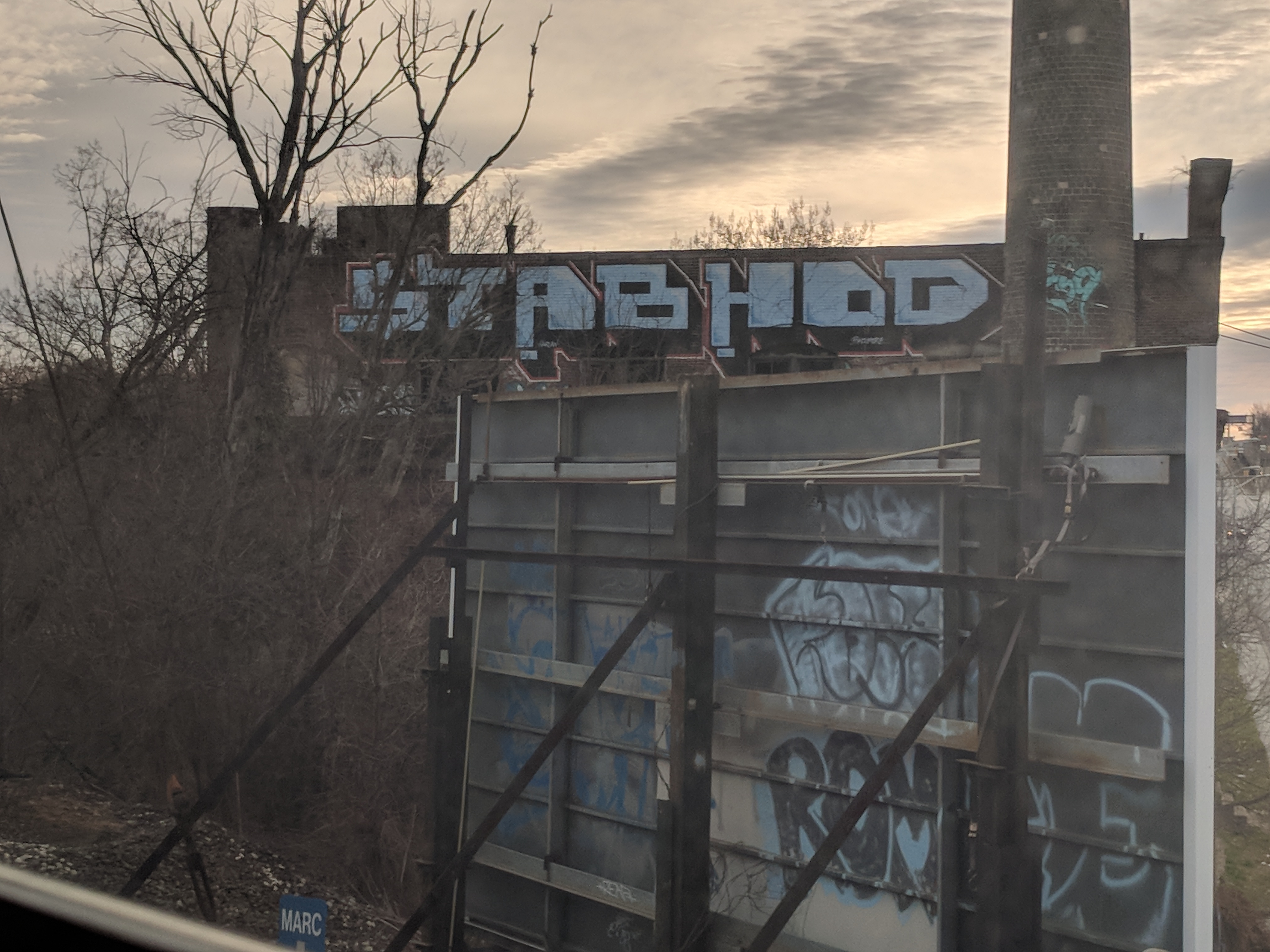
While heading north yesterday, I had just snapped this photo in West Baltimore as our train came to a stop — not a jarring stop, but an unexpected one as I gazed down from the overpass where my car #3 was perched. I felt victorious when I boarded the train yesterday — with the help of the wonderful Amtrak Red Cap, I was the first one to board the quiet car. Frequent Amtrak riders know that the quiet car is the best — no cell phone calls, usually more room and people are just busy working or reading. The quiet car also doesn’t carry the extra cost of business class; as a plus the WiFi is generally more stable in the quiet car for its proximity to the business car, unlike the complete unreliability of connectivity in the general cars.

As we came to our stop, I was just finishing the last of my weekly prep for classes when one of the conductors announced, “We have a train emergency. We need everyone to stay calm. We have a tresspasser on the tracks, and we’ve had an incident.” Now, because lots of my fellow passengers had headphones on, not many heard this announcement. It’s not unusual for a train to stop to let other, faster train traffic through at odd spots along our northward route so at this point, no one is even thinking it’s a disaster to be sitting on an overpass. By the second announcement, people are starting to peek up over chair backs to ask neighbors what is going on. By the conductor’s second announcement, we know the truth – our train has struck someone. By the third announcement, we know the victim is female. By the fourth announcement, we now know that EMS is on the way — and from my vantage point on the overpass, I can see the ambulance pass underneath our perch. I start sending notes to my family to let them know where I am; and a forward note to my meeting still several cities away that I may be late. Then I google the accident.

Train accidents are more common that we all may think. The big ones, cars or trucks stuck on the tracks or cars racing trains make the televised news. People on the tracks rarely make headlines, and in 2017 over 2,100 people were struck by moving trains. This is no small number, and in fact is a crisis. Train tracks are usually fenced off, hence the conductor’s announcement of a trespasser on the tracks; but this hardly means tracks are inaccessible to humans. The report of our accident described the female victim as, “attempting to cross the tracks” — yet, there is no reason to cross the tracks at this urban, overpass setting. No reason.

We were allowed to move slowly into Baltimore after EMS departed and an inspection of the tracks by law enforcement; and allowed to leave our train to quickly transfer to another headed north to reach our destinations as our train’s crew was pulled out of service and the train put to rest until a full investigation took place. I learned from a fellow passenger, who had been on another train that struck someone that we were lucky — based on the shortness of our delay, the victim was alive. Had the victim been a fatality, our delay suspended above West Baltimore, would’ve been several hours of shelter-in-place. Lucky is not a word I’d use; fortunate maybe, that we only lost an hour of our morning and that we have our health to race to another train, up a flight of stairs and down another. Fortunate that we ourselves did not attempt to cross the tracks in front of a train going upwards of 50 mph as it rounds a bend into downtown Baltimore. Fortunate that we did not suffer from whatever reason the victim chose to cross the tracks, and fortunate that we do not bear the injuries that must’ve resulted from such an impact. The victim was reported by local news to not only be alive, but alert. Alert most certainly is not fortunate.

Meetings aside, I spent most of the day searching for news…any update on the victim. Does she have a family? Does she have friends to rush to her side? Her life is most certainly going to be difficult going forward. And what of our train driver? Does Amtrak offer the needed support for what he and the rest of the staff may’ve observed? Too many questions that deserve answers — and further investigation. I still believe that train travel is the only way to really see into America’s collective soul — and today, with so many world events shaking, it is worth a few moments of respite and introspective concentration to really understand how one victim, on one rail line, is so representative of all that ails America.


Marie Kondo, Fly Lady and Shel Silverstein


I know I’m not the only one that caught a few episodes of Marie Kondo on Netflix over the past month — January is always a time to clean-out, donate and do a major tidy-up. The idea of tidying isn’t new, but the Zen-like sweetness of Marie Kondo, based on the number of articles on all kinds of publications about the show, is taking organization way beyond, “cleanliness is next to Godliness.” Kondo’s perfection is a contrast to other systematized, ritualized processes for home peace like Marla Cilley’s Fly Lady who has been around for more than a decade. What is it about Kondo that is so different from Fly Lady?

I was devoted to Fly Lady early on in my mothering years: this service teaches you to break down your home into zones, where to focus your attention, emails you a “flight plan” to-do list each day and like Kondo, talks about loving your home. Cilley’s “swish and shine” mantra keeps you and your home on-task, clutter and dirt-free and her method of tackling big projects systematically helps to avoid the overwhelm of whether to tackle the hall closet or the under-bed storage. Fly Lady is the every-woman of how to get dressed, put on mascara and out the door (while tossing in a load of laundry)– she’s almost the home maker version of hiking’s “leave no trace” as a means of showing love to your home and yourself.

Kondo on the other hand, never addresses cleaning — her focus is clearing. I never boxed items within a drawer until I watched Kondo do it, albeit I used leftover containers from our local Thai restaurant and not brand-new boxes from Target. Kondo’s approach to loving each item, then releasing feels a little uncomfortable and I’ll admit — it’s become a serious joke in our house. “Do I love these boots?” “Nope, never have — I love what they do for me, but I hate the way these look on my feet.” Because love is all about gradations — and being realistic, sometimes we must own and buy things we do not love though we can love their function or their service to us in a time of need. This is where Kondo’s method falls apart and plays into that which is so American — the temporariness of love, and the need to feel good at all times — and that high, the seratonin rush, that we feel during this glow of infatuation.

As Americans we are always looking for the answer – today, an hour ago, hurry up. I too feel this high when I conquer a box after moving, and we have plenty of boxes after many moves. But we need both, Kondo and Fly Lady, to live — and survive and thrive — in a modern life that challenges us mentally and physically each day. We need the high, the reward to reach into motivation — but we also need a method to take care of ourselves. So let’s power through the stuff in our drawers (thank you Marie) and at the same time, learn to “swish and swipe” each day under the methodical guidance of Fly Lady — who really needs her own show. With all the “adulting” classes targeting the under-30 to high school set, as a society, we really need the un-glad skill set, the practical how-to, of managing a home.

But now for some humor, as only Shel Silverstein can write — while there’s shame in the mess (we all know and feel it) — why can’t there be a bit of comfort and familiarity in the ramble?

Messy Room by Shel Silverstein
Whosever room this is should be ashamed!
His underwear is hanging on the lamp.
His raincoat is there in the overstuffed chair,
And the chair is becoming quite mucky and damp.
His workbook is wedged in the window,
His sweater’s been thrown on the floor.
His scarf and one ski are beneath the TV,
And his pants have been carelessly hung on the door.
His books are all jammed in the closet,
His vest has been left in the hall.
A lizard named Ed is asleep in his bed,
And his smelly old sock has been stuck to the wall.
Whosever room this is should be ashamed!
Donald or Robert or Willie or–
Huh? You say it’s mine? Oh, dear,
I knew it looked familiar!

Half-Light

IMG_20190123_092843-1Winter never allows for much light — but here in the East, we’re lucky on most January days to reap what I call, “half-light” — a condition where the deciduous trees appear to let in more light and sound, but because of the sun’s position and earth’s rotation, we end up stuck with just a fraction of what we’d assume. Low-hanging cloud cover only further dilutes the weak power of our biggest and brightest star. For those of us that struggle through the gray with sun lamps, acupuncture, Vitamin D, bamboo socks and warm frothy drinks — half-light is one of the biggest blows to the psyche.

The in-between is the chasm — it’s as if, day didn’t quite care to break: day didn’t have the energy to combat the night, so it raised a limp arm with a not-so imperial wave of foggy fingers and simply cast a shadow over the hills — the poor valleys don’t stand a chance. But unlike fog with its eventual movement, half-light holds steady as a silent storm over the winter landscape — it holds no mystery, as it reveals nothing — again, unlike fog which often reveals the crispness of winter sun rays above. Half-light is the turtle of winter, yet it has no race to win…it exists only to plod and hold steady; it is the solstice equilibrium of partially day, partially not — the nowhere of in-between.

Emily Dickinson, one of my poetry idols, captured this feeling best. What is the meaning of this light? Is it the half-way mark between winter and spring? Life and death? Valley and peak? Love and despair?

There’s a certain Slant of light (258)

Emily Dickinson1830 – 1886

There’s a certain Slant of light,
Winter Afternoons – 
That oppresses, like the Heft
Of Cathedral Tunes – 

Heavenly Hurt, it gives us – 
We can find no scar,
But internal difference,
Where the Meanings, are – 

None may teach it – Any – 
‘Tis the Seal Despair – 
An imperial affliction
Sent us of the Air – 

When it comes, the Landscape listens – 
Shadows – hold their breath – 
When it goes, ‘tis like the Distance
On the look of Death –

Stopping by the woods…

The first snow of the year is most certainly the best — and it looks like this one may not melt before the next one arrives. We are lucky enough to live near a network of trails, that are often highly used for commuting as well as general meandering. Yesterday’s journal to the trail, brought Robert Frost’s poem to mind, “Stopping by the Woods on a Snowy Evening” as I had just taught this last fall — and it would’ve been so wonderful to do a reading live in the snow.

Snow is meant to give pause and as Frost notes, “He will not see me stopping here/ To watch his woods fill up with snow.” Those moments when no one is watching us take a breath – how delicious it truly can be, palatable, just a small break to savor beauty or silence or even chaos unfolding. Most often we believe the “snowy evening” to be ethereal when in fact it is really precisely, figure skater-like, chaos — from the careful landing of each flake to the swirling of miniature ground-touching wind, snow — while generally silent, makes its presence known in crevices we did not know existed just moments before. The jaggedy, often long cracks in the rock face often mirror that of the soul — where oh where, will the soft flakes land, and will we have eyes to see them?

Frost carefully notes, and repeats that his journey must continue — as every journey must. His horse has naturally, as a staid and true worker, questioned Frost’s pause to ponder and wonder — with the not so subtle reminder of his harness bells — harkening Frost back to the path ahead. “And miles to go before I sleep / And miles to go before I sleep.” The path, the promises — it’s all the same, and often feels never-ending. But the snow, glorious snow, offers those moments of reprise — the opportunity to observe peace and chaos existing side-by-side in simultaneous fashion and that loveliness exists within that chaos. Top the journey off with a short pour of Bailey’s after, and the day is near perfection.

Stopping by Woods on a Snowy Evening

Whose woods these are I think I know.
His house is in the village though;
He will not see me stopping here
To watch his woods fill up with snow.
My little horse must think it queer
To stop without a farmhouse near
Between the woods and frozen lake
The darkest evening of the year.
He gives his harness bells a shake
To ask if there is some mistake.
The only other sound’s the sweep
Of easy wind and downy flake.
The woods are lovely, dark and deep,
But I have promises to keep,
And miles to go before I sleep,
And miles to go before I sleep.

Snow Scones

For the last several Januaries, my daughter and I have made a list of items to conquer in the kitchen over the next year — our list is not long, and it often includes basic items that had elluded us in the past (okay, mostly me, she’s too young to have a long list of kitchen failures). This year scones and flaky (not hockey puck) biscuits are tops on the list. With our weekend snow storm, and a new pastry blender, time was on our side to dive into blueberry scones.

As an English teacher, part of what I help students to understand, I hope, is that writing is 50% process and 50% action and that actual writing takes up only 20-30% of that action time. So, this is my new approach to cooking — goal, objective, method. The idea of making a homemade scone, with the merging of the butter to flour for the perfect crumble was a real stumbling block because the “idea” of it was daunting. I’ve made scone for years from using Fisher Scone Mix, that of my childhood and the Puyallup Fair — this mix only requires water. So the resolution? Spend the most time finding a recipe that is not overwhelming, easy to follow steps that actually make sense, and no rushing. Using my 50% process, 50% action scenario I assumed the most time would be spent on finding the recipe and securing a non-wimpy pastry blender, and ingredient gathering is easy (we take an elevator downstairs to the grocery, which helps with the amount of time spent on action items). The real boon of this project — a snowstorm — and I’d already gathered the critical items of blender and recipe.

After scouring around the internet, I went to my go-to baking site King Arthur and located a blueberry scone recipe. Now if you follow this link, be sure to compare their photo and my non-stylized photo — I think we ended up with a pretty good match and really, I was convinced this was the right recipe based on one line of the instructions, “Use a muffin scoop, jumbo cookie scoop, or 1/4-cup measure to scoop the dough onto the prepared sheet in scant 1/4-cupfuls, leaving about 2″ between each.” Muffin scoop! No needing on a floured surface, folding or cutting in perfect angles. And if no muffin scoop is available, two other regular cooking utensil items are offered as alternatives. Looping back to my goal/objective/method process — here we have a method for scone prep that is accessible and understandable that accommodates just about any home baker. Breaking down any project into digestible and accomplishable bits rests solely on methods that make sense and lead to results that the writer/baker/plumber/painter can parlay into results that lead a reader/eater/viewer/person with clogged pipes to understanding. 

For this scone experiment — the results are gone. Our little family devoured nine scones (that may sound like excess, but reminder: snow day) by mid-morning. Taste — just like the photo in the recipe — a slight crunch on the outside, soft inside, blueberries in-tact, just enough butter for a smooth crumb, the salt rises to meet the outside crunch. There is still snow, loads of it, so today may lead to a blackberry or raspberry version. Thank you King Arthur Flour!

One last gingerbread…

img_20190104_055100It is the last day of Winter Break…one of the saddest days of the year, to me. Yes, we’re only several days into the year — but the return to routine, is a bit like a door closing on a season that is all too short; we are urged from every direction whether our faith community or the news — to slow down, be mindful, take more time with loved ones, focus on what is really important…yet there is always a reckoning day – the day we must face the reality of routine and accomplishing tasks and we march toward a myriad a goals to be realized.

My answer: one last gingerbread breakfast.

This may not seem like a solution to most folks that see cake for breakfast as a bad thing — I however celebrate cake for breakfast in its many forms. As a person that has worked through numerous nutrition scenarios over my now 50 years (I have the privilege and anguish to have the rarest of all U.S. birthdays, January 1), I can say that cake for breakfast has provided the mental buoy that I have needed to glide into many challenging days. For those that find themselves agape, with the horrified hand to cover their wide open mouths (the sugar! the lack of protein!), I’ll tell you this — the serotonin boost from the anticipation of a spicy, dark cake breakfast soothes even the dreariest day and does more to combat the cloying grayness than any protein-infused breakfast.

While I often make gingerbread from scratch, Trader Joe’s is the best mix available — as soon as you open the bag, the ginger symphony wafts upwards to greet you, and an immediate calm covers you. Now, I do make an alteration to the prescribed mixing instructions substituting apple sauce for oil, which adds nutrients and subtracts calories. At the beginning of the season, we anxiously await the release of this mix and this year stopped by several TJ locations (thankfully we now live in an area with many) to see which days the stocking of the mix would commence — and yes, we went on day one. Four boxes pretty much sees us through the season and so as not to take any risks, we buy all four on our “fist day on the shelf” shopping trip.

Gingerbread, and all its delicious glory and grace is to me, metaphorical for how this year will go — layered flavors, spice, savory but sweet, a respite. Gingerbread rallies our little team, its packable and mobile (unless you put cream on top), and it is the pause before a flurry of snow or activity. It requires that you slow down — there is no way to eat gingerbread fast. It is quiet, rich, comforting when all else seems to be speeding away and out of control. As light begins to creep into the day, it seems clear that rain is not so far away — again. But for today, we’ll start with cake to trick our brains away from the desolate color, the fact that the routine is about the begin in earnest, and make small plans to enjoy this last morning of freedom.