“I’m so glad I live in a world where there are Octobers.” L.M. Montgomery, Anne of Greene Gables
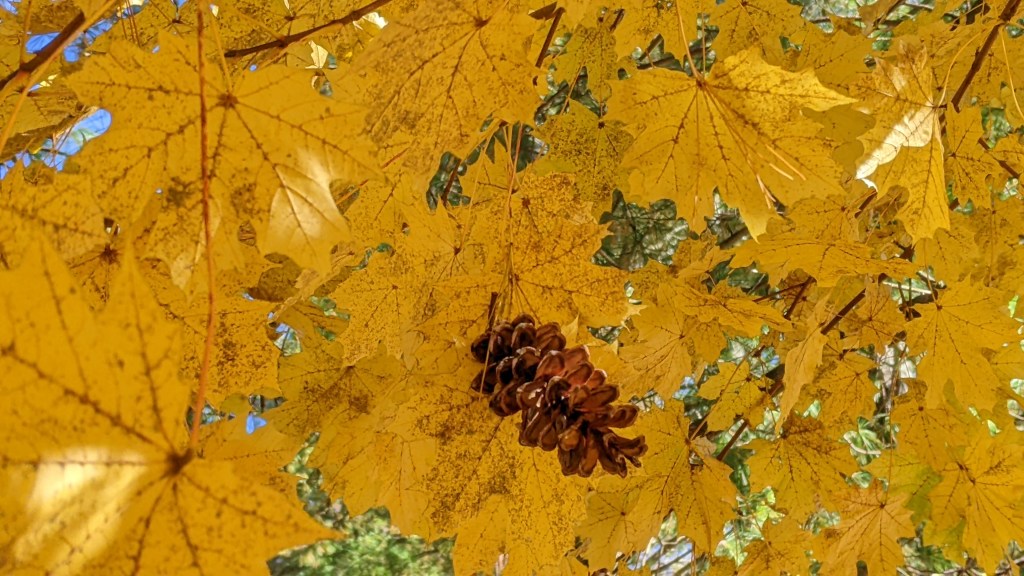
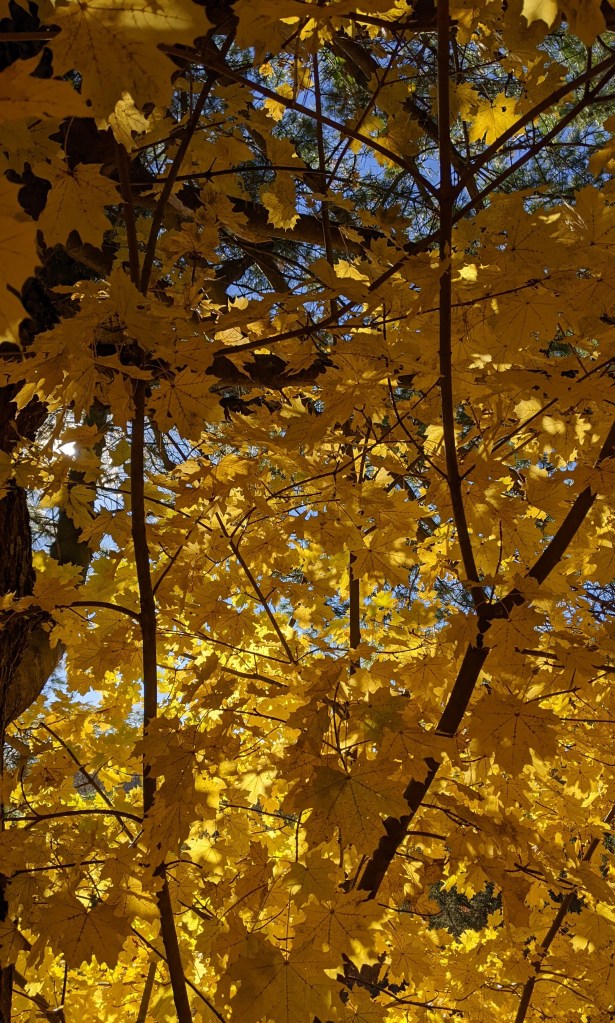
Montgomery said it best, and there’s really nothing more to add: Octobers are the absolute best and the arrival of color in the NC High Country is almost beyond words. Yellows that are deeper than any palette of oils and fire reds that burst onto the horizon — if only fall could last all year. Trying today to hang onto these colors, and this feeling.
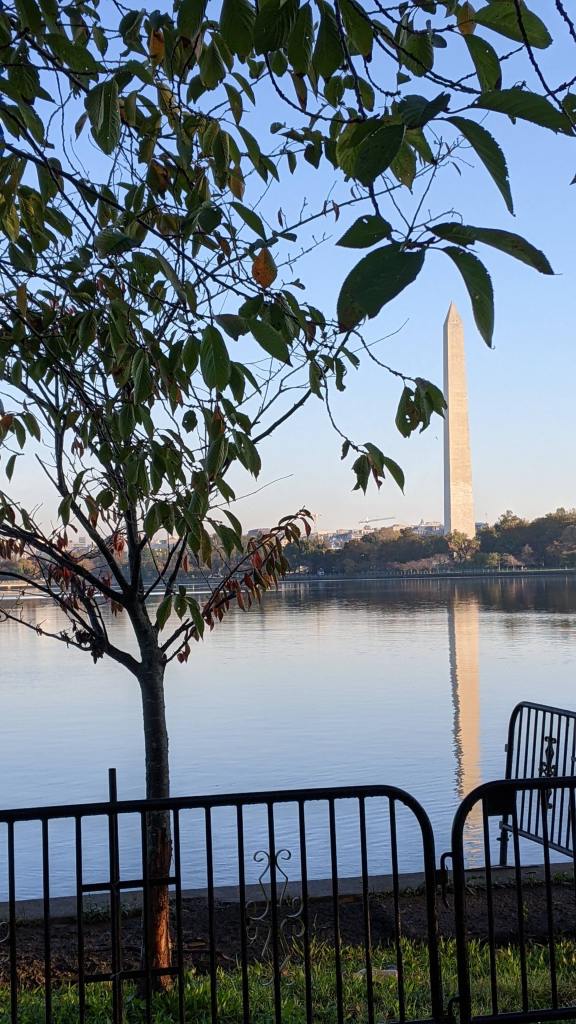
The history of DC’s cherry trees is fairly well known, but the story of how these trees must be protected and cared for, probably less so. To add to the complexity of preserving these aging trees, their micro-environment here at the Tidal Basin is fraught with peril. The land around the basin is slowly sinking while sea levels rise, and today it’s nearly equilibrium as sidewalks surrounding the basin as well as the soil to which these delicate trees cling, are often flooded. Add in the torrential storms that pass through the region, along with upper Potomac run-off that speeds toward the Atlantic from the Blue Ridge and suddenly using the word “peril” doesn’t seem extreme.
The beauty of the trees draws visitors from around the globe and I’ll be the first to admit, there is something about this natural display of pink cotton balls that has me on blossom watch too — and I too, like so many, feel drawn to be part of the festivities. It’s not only the natural explosion of color, it’s the participatory nature of the blooms — the cooperation, the friendliness, the seeing people from all walks join in conversation — all because of these blossoms. But then, the blossoms wither, and next thing I know, humidity is bursting onto the scene and we are left with the hordes of school groups that descend and no one seems to care much for the less than glorious green leaves of summer, or the deciduous scrawniness of fall. Or more importantly, the floods that leave walkers and runners clinging to the sides of the basin.
This is the real story of the tidal basin: we love it when we love it (much like any natural environment), but when we’re not in it, we cease to give it a second glance. So true is our approach to climate change, rising seas, and all that goes along with this perilous issues — our lack of a backward glance drives these changes. I would never propose to know the path forward, but I do know which paths become impassible without change — today, we’re in the mud, but to preserve beauty, simply moving to higher ground is no longer enough.
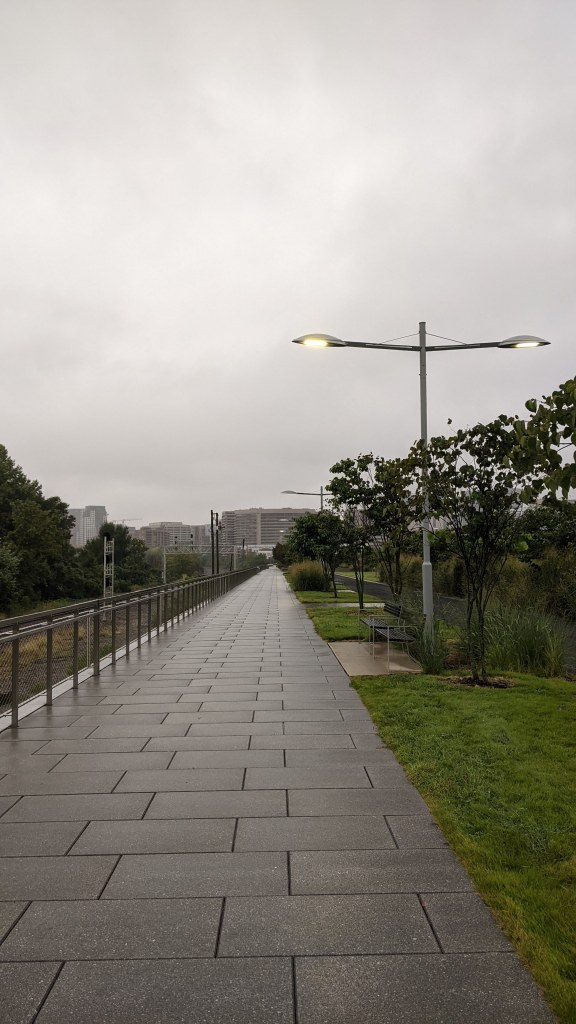
When you wake up at the weather app says it’s only 59 degrees, it is a feeling of pure joy; just two weeks ago it was easily 89 with 100% humidity just after the sun rises. On this glorious day to come, it looks as if the sun may not ever peek through and after a blistering, sweltering summer it is absolute relief to be outside — in a raincoat — walking at a fast clip without streams of sweat rolling down our faces.
Just the day before we purchased new raincoats at REI (member sale weekend – wahoo!). The tag in these Rainier model coats, a coincidental prediction of weather to come boldly states, “Get outside like you’re from Seattle.” When we were standing in line to purchase these, we wondered aloud to each other — well, we are from Seattle originally, shouldn’t we get a extra discount? As a member my entire adult life, which I obtained at the original REI warehouse store on Seattle’s Capitol Hill, I do think I should probably be eligible for some sort of “extra” to celebrate my longevity and devotion. Those original wood plank floors and bins of wool hats and gloves with skis hanging from the rafters were an REI far from its look of today — the scrappiness is missing. Maybe I’m not scrappy anymore either, and maybe that should be okay (but it’s not, really).
There is great value in scrappy and grey — it is not the languish or morbidity of heat, nor the shock of freeze that can paralyze — scrappy and grey is movement. Movement toward something, away from something, into something — the breadth and depth of a fog that reveals, or a tidal bump that offers a nudge. Grey and scrappy is to set the mind free through an afternoon of sketching or reading; it is also the creative big that bites and leads to discovery.
Grey mist doesn’t slow one down, it just requires the right layers to move ahead: scrappy power.
The humidity snapped: we never think it will happen and then magically it does. Hoodies, sweaters, long sleeves and jeans all come popping out of the caverns these have been stuffed into. We walk outside and can actually breathe freely, not hesitatingly, not haltingly as we must through the exhaustion of constant heavy air — we can actually move in this air that does not wear us down and wear us out within minutes. The fall is when we begin to feel alive after the drudgery that is summer here: we can greet the day with some level of joy and yet still enjoy an iced coffee on the sidewalk (in our hoodies).
John Keats wrote “To Autumn” September 19, 1819 and the first stanza in particular speaks to all the glory that is this season — the best season.
To Autumn (first stanza here, link to complete poem)
Season of mists and mellow fruitfulness,
Close bosom-friend of the maturing sun;
Conspiring with him how to load and bless
With fruit the vines that round the thatch-eves run;
Since 1808 the area known as Long Bridge has connected the Virginia side of the Potomac to the D.C. side of the Potomac; historically, this area was part of the capital city but was ceded back to Virginia pre-Civil War. A quick Google will turn up facts such as the history of the foot bridge here where rates were different for foot-only, or person plus horse traffic, and sheep or pigs. Today, freight and commuter trains roll by while planes take off nearly every minute from National Airport (as a long-timer here I do not call this airport by its current name). This week on one of the first not excruciating days of September, the skies are blue and clear — no humidity haze hangs on our heads as we walk and watch the human and nature made transportation soar and roar past us.
This particular week of September always feels compressed: the weather is finally changing, the sky is clearing but there are memories and sadness that lead to the compressed feeling compared to the expansiveness that next week will bring with the seasonal changes. Twenty-two years ago, September mornings started much the same as this one – clear blue skies, beautiful temperatures to meet the sunrise – a fall day full of hope. And smoke. And jet fuel. And destruction. And words that still do not full express the trauma of living near, and with terror. Here on this path, in the shadow of the Pentagon and its breach, I always feel that we live in one of the safest places in the world — we know the sounds of various types of helicopters, to look for the signs — a silent sky is not a friendly sky. It’s hard to think of the losses that are ever-present in hearts and minds. On this day, there is peace on these banks. The seabirds fly, the squirrels frantically dart and the day goes on as any other early fall day might, except for the memories.
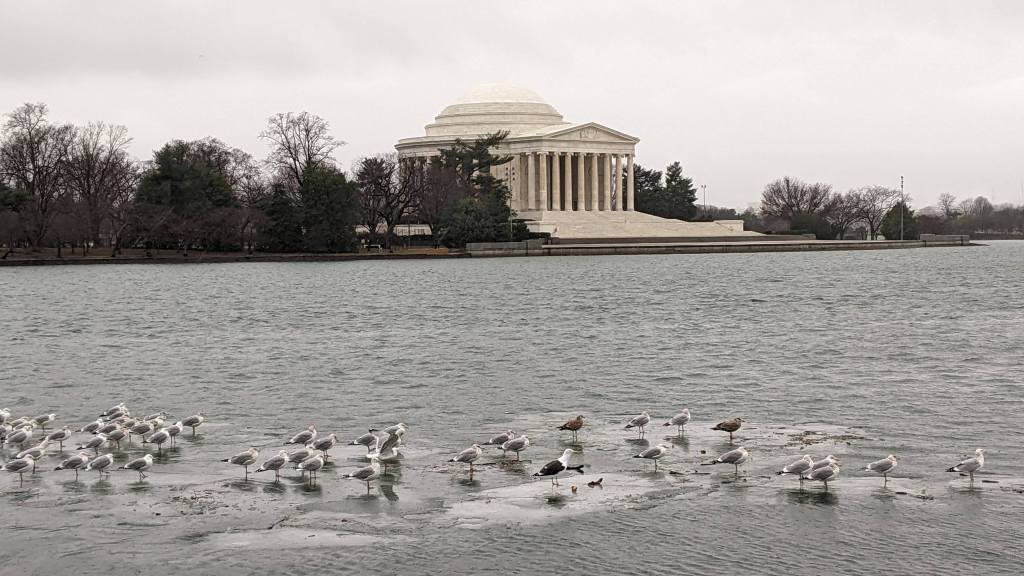
These seagulls found the last remaining ice floating on the Tidal Basin for a rest and some fishing. It may be tough to see but one of our gull friends had just plucked a live catfish out for breakfast — only to find the gulls from each side of the iceberg jumping onto his part of the berg, casting the whole flotilla to begin drifting precariously toward the sea wall. While we didn’t wait for the crash, we did observe that these squawking friends appeared unconcerned even though their perch was about to slam into a decaying concrete wall. Their eyes only see the sky above, when their beaks are not pecking frenetically into their subdued prey. Within weeks, this scene will burst with a frenzy of pink blossoms; but grey washes out all color — grey sky, grey water, grey birds.
Late last fall I began posting photos on Instagram with the tag #morning view. Every morning we head out for a hike or long walk to start the day with clear minds, and check-in on the characters that we’ve grown accustomed to on these treks.
But at some point over the last month, as I struggle to write anything but lesson plans it occurred to me that my material was obvious: #morningview needed a plan too. Since we’ve been unable to travel during the Pandemic, our roaming has and continues to be much closer to home than usual — but the amount of material within 50 miles of home is immense. So I thought to myself maybe I should write what I see everyday, instead of waiting for those bigger trips; it’s rare a day goes by that I don’t take at least one photo so here we go. For now, I’ll start where we are and work backward to the beginning of the year. Fingers crossed, this project will have a bigger purpose soon.
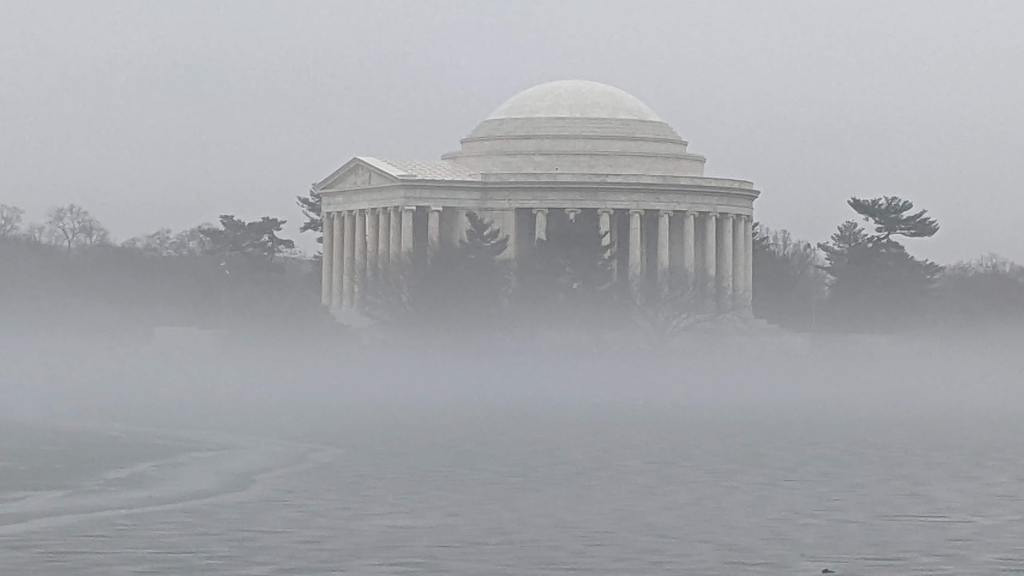
Jefferson in the Mist: February 3. Freezing fog, ice on the Tidal Basin.
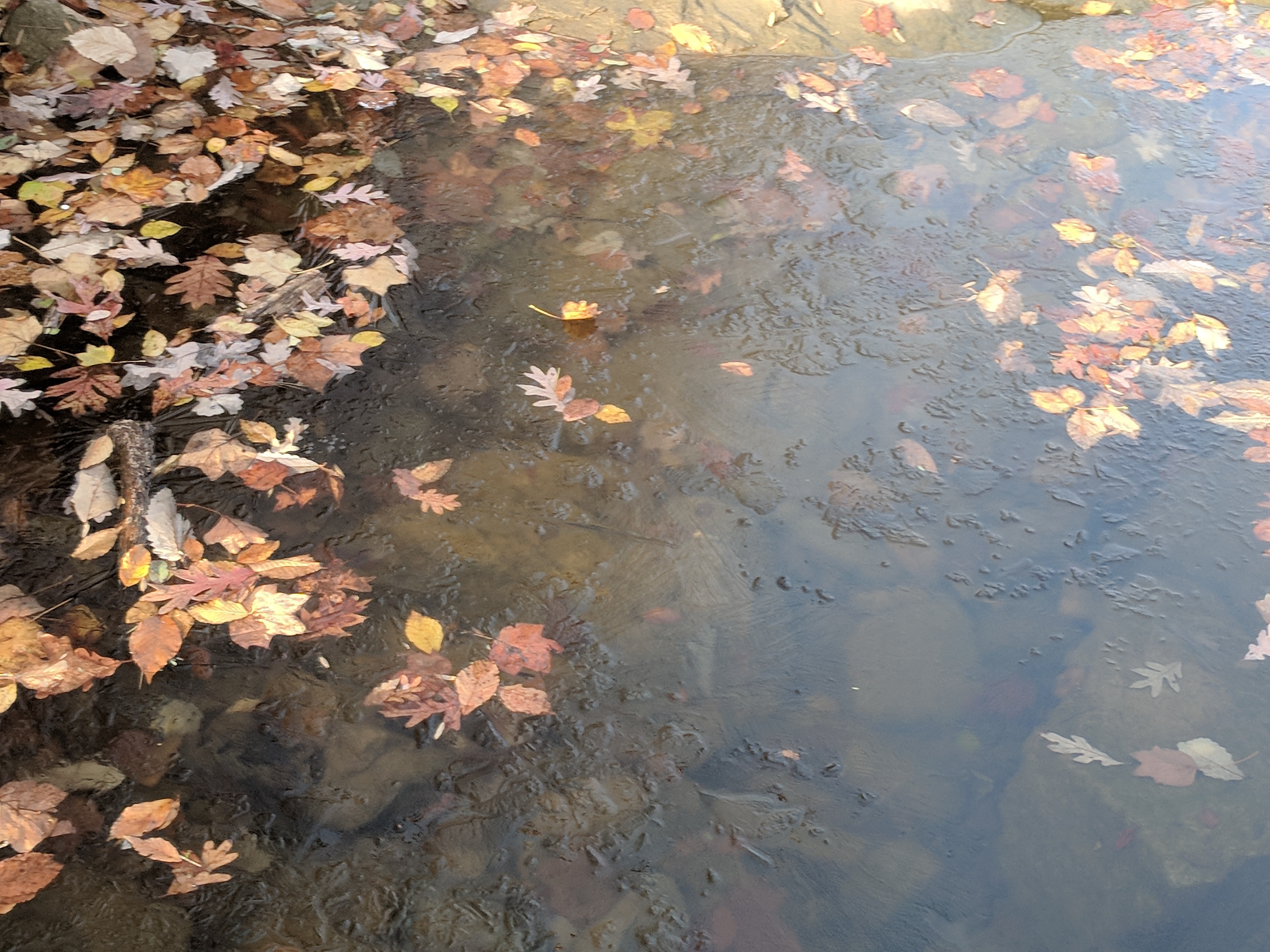
Cold and damp to the bone day, but hovering around freezing as we head out for this trek. Some days we have a particular route we want to take on these outings, or a particular goal. For this day, it was all about capturing the fog as best we could as it hovered on top of the monuments. It’s easy to see the the swirling and shifting patterns in the ice – that moment, or many moments over the last few weeks where time stood still and this usually fluctuating basin for the Potomac and snapped it into place. For weeks on end the water moves with the tides that roar up and down the Potomac; but for now time is suspended while the sheet of ice captures all that moves.
Dense fog encircled the Jefferson on this day and I think back to a few times I’ve been stuck in airports due to freezing fog like this — because it’s hard to hear the usual soaring upward roar of jets taking off from nearby National Airport (I will always use the original name). Jets may well be taking off for that sunshine above the clouds, but silence reigns on this day. Our usual helicopter friends from Marine One to Eagle One and news choppers are also silent – no whirring, thwap thwap just above the tree-line, as visibility is below zero. On this day, silence is omnipresent – except for our shrieking at the awesomeness of the ice (wishing we had some sticks to poke it) and witnessing the suspension of time.
“Teach this poem” lands in my inbox early each morning thanks to Poets.org. As the cold bears down on us here in the East, and while the clock may indicate that day should break soon, clearly even the sun is desirous of hibernation. As I click on my sunlamp, I am yet surrounded by the sights and sounds of darkness. Joon’s poem, “Between Autumn Equinox and Winter Solstice, Today,” today’s “Teach” installment offers a new way to think of the cold — wear it. As I ponder which coat to wear on my afternoon trip North, I will think of the cold as something I wear — like the season — but unlike one character within the poem that says the cold has “broken his windows,” I will wear my cold with joy, for it is the season I love the most.
I read a Korean poem
with the line “Today you are the youngest
you will ever be.” Today I am the oldest
I have been. Today we drink
buckwheat tea. Today I have heat
in my apartment. Today I think
about the word chada in Korean.
It means cold. It means to be filled with.
It means to kick. To wear. Today we’re worn.
Today you wear the cold. Your chilled skin.
My heart kicks on my skin. Someone said
winter has broken his windows. The heat inside
and the cold outside sent lightning across glass.
Today my heart wears you like curtains. Today
it fills with you. The window in my room
is full of leaves ready to fall. Chada, you say. It’s tea.
We drink. It is cold outside.
Thank you Poets.org for this winter discovery of Emily Jungmin Yoon.
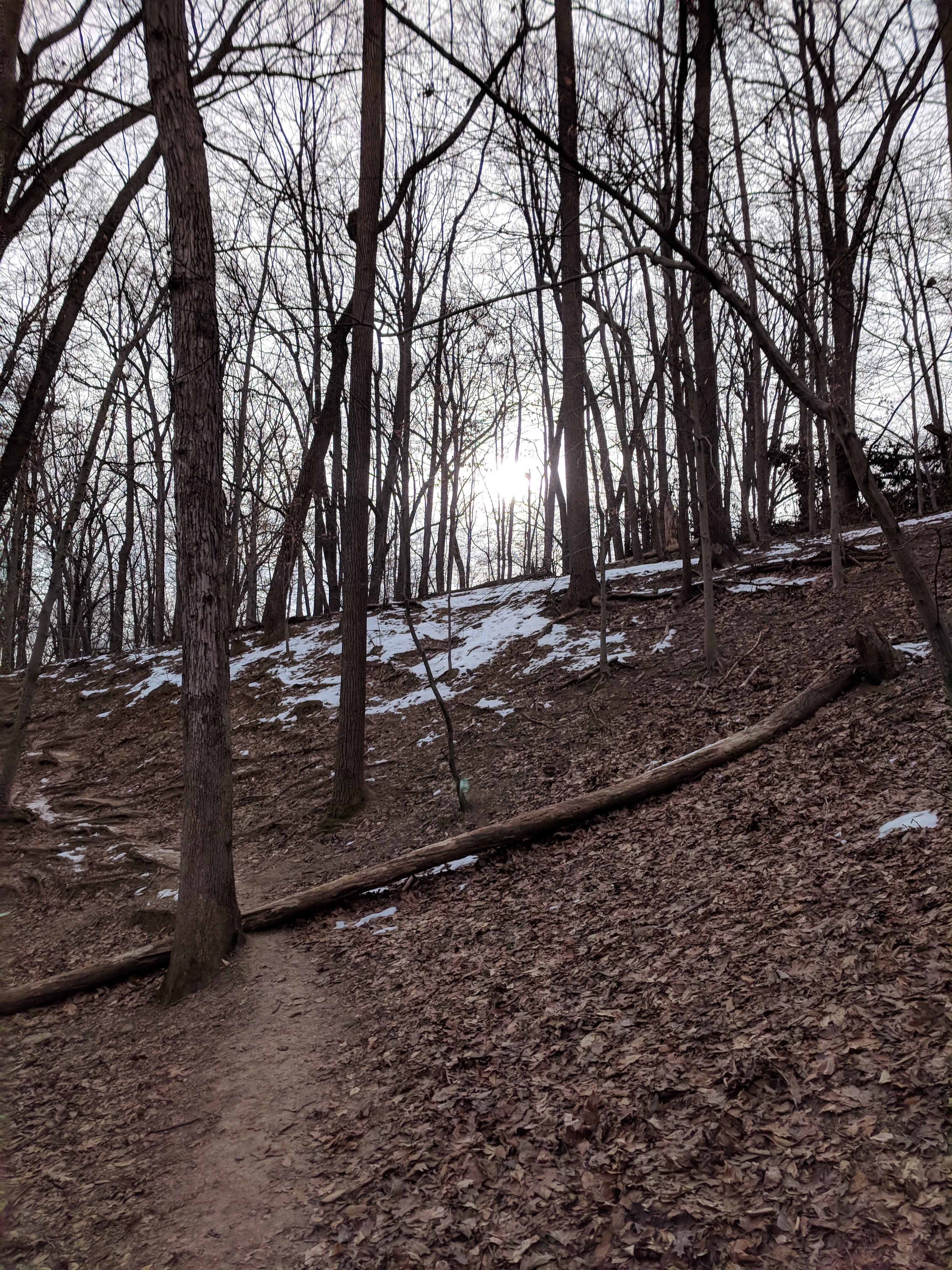
Winter never allows for much light — but here in the East, we’re lucky on most January days to reap what I call, “half-light” — a condition where the deciduous trees appear to let in more light and sound, but because of the sun’s position and earth’s rotation, we end up stuck with just a fraction of what we’d assume. Low-hanging cloud cover only further dilutes the weak power of our biggest and brightest star. For those of us that struggle through the gray with sun lamps, acupuncture, Vitamin D, bamboo socks and warm frothy drinks — half-light is one of the biggest blows to the psyche.
The in-between is the chasm — it’s as if, day didn’t quite care to break: day didn’t have the energy to combat the night, so it raised a limp arm with a not-so imperial wave of foggy fingers and simply cast a shadow over the hills — the poor valleys don’t stand a chance. But unlike fog with its eventual movement, half-light holds steady as a silent storm over the winter landscape — it holds no mystery, as it reveals nothing — again, unlike fog which often reveals the crispness of winter sun rays above. Half-light is the turtle of winter, yet it has no race to win…it exists only to plod and hold steady; it is the solstice equilibrium of partially day, partially not — the nowhere of in-between.
Emily Dickinson, one of my poetry idols, captured this feeling best. What is the meaning of this light? Is it the half-way mark between winter and spring? Life and death? Valley and peak? Love and despair?
There’s a certain Slant of light,
Winter Afternoons –
That oppresses, like the Heft
Of Cathedral Tunes –

Heavenly Hurt, it gives us –
We can find no scar,
But internal difference,
Where the Meanings, are –

None may teach it – Any –
‘Tis the Seal Despair –
An imperial affliction
Sent us of the Air –

When it comes, the Landscape listens –
Shadows – hold their breath –
When it goes, ‘tis like the Distance
On the look of Death –
The first snow of the year is most certainly the best — and it looks like this one may not melt before the next one arrives. We are lucky enough to live near a network of trails, that are often highly used for commuting as well as general meandering. Yesterday’s journal to the trail, brought Robert Frost’s poem to mind, “Stopping by the Woods on a Snowy Evening” as I had just taught this last fall — and it would’ve been so wonderful to do a reading live in the snow.
Snow is meant to give pause and as Frost notes, “He will not see me stopping here/ To watch his woods fill up with snow.” Those moments when no one is watching us take a breath – how delicious it truly can be, palatable, just a small break to savor beauty or silence or even chaos unfolding. Most often we believe the “snowy evening” to be ethereal when in fact it is really precisely, figure skater-like, chaos — from the careful landing of each flake to the swirling of miniature ground-touching wind, snow — while generally silent, makes its presence known in crevices we did not know existed just moments before. The jaggedy, often long cracks in the rock face often mirror that of the soul — where oh where, will the soft flakes land, and will we have eyes to see them?
Frost carefully notes, and repeats that his journey must continue — as every journey must. His horse has naturally, as a staid and true worker, questioned Frost’s pause to ponder and wonder — with the not so subtle reminder of his harness bells — harkening Frost back to the path ahead. “And miles to go before I sleep / And miles to go before I sleep.” The path, the promises — it’s all the same, and often feels never-ending. But the snow, glorious snow, offers those moments of reprise — the opportunity to observe peace and chaos existing side-by-side in simultaneous fashion and that loveliness exists within that chaos. Top the journey off with a short pour of Bailey’s after, and the day is near perfection.
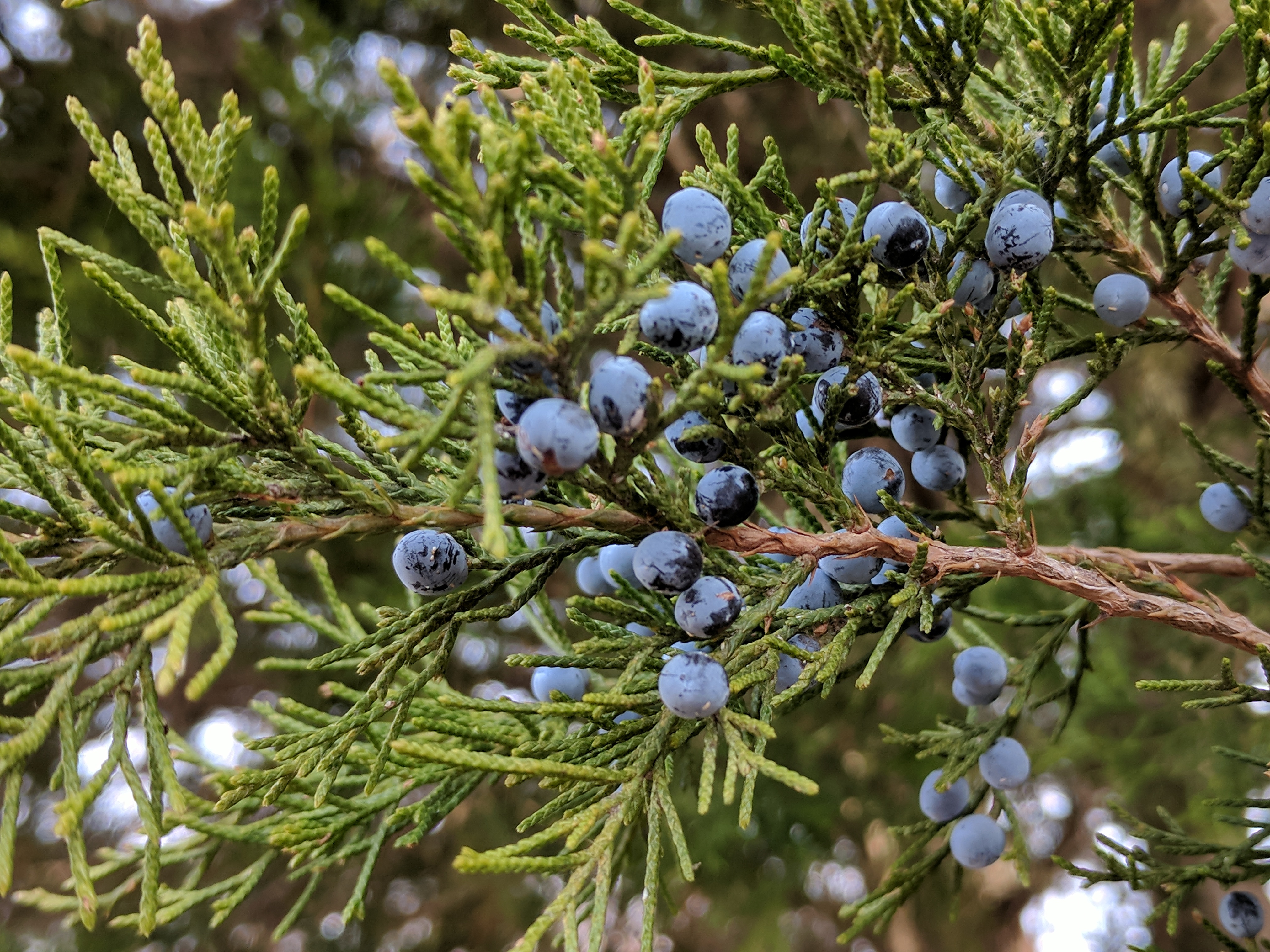
The lovely cedar tree — not one I see often in the near South, but one that “roots” me of my Pacific Northwest roots for their abundance in not only the general landscape but my yard growing up. Most of my childhood memories are set in my mind as either sunny or rainy, most likely an effect of the climate, but not in short-part due to growing-up experiences — suffice it to say, there was never a drought.
But the cedar, not the tallest among the trees but most assuredly one of the sturdiest for its pliability, reliable scent, little berries that can drunken birds into flying into windows and of course, their mid-tones of green. I’ve just read and only seen thus far the new BBC One program featuring Dame Judi Dench: My Passion for Trees. In the clip making its way around social media, Dame Judi shares a bit about the program and her six acre garden; the show will lead viewers into the life of trees — what is going on underground, under their bark and what looks to be, some super-cool scientific/electronic renderings. Oh to have that technology at my fingertips.
For me, several years of high school horticulture netted some interesting results. We had barely a quarter-acre, but it boasted a row of these lovely cedars as a barrier to our busy road along with several 50-plus foot Douglas Firs. Our cedars were of the Western Red variety, which adds a brickish-red undertone to the multi-hued green needles. During the holidays, I could mass produce projects for class within a five-minute jaunt outside. Need a wreath? Pop out to the yard. Building a yule log? Pop out to the yard. An aged holly bush in addition to this mini-forest of evergreens added the holiday red adornment that every wreath-buyer wants. Now, I’d incline away from this as I favor the layering of the shades of green as I miss it so in my current deciduous landscape.
What strikes me about Dame Judi’s show from its clips is the focus on the life of trees — for me this life, while distinct from human, cannot be removed from human experience. Trees serve our memories in ways that I believe, we cannot yet fully imagine — the cedar is constant for my sunny-side memories: first romp in the yard alone, the feeling of freedom and confidence to nestle alone in the woods, as a profit-making partner, as a solace when nothing else was right in the world. I hope the program will explore the joint existence of human and tree — we all know that nature provides the buoy to health, but the absolute necessity of the bond, is worth exploration.
Yet another snow event has blanketed the near-South, in winter wonder — this time not so much powder as last time, a little more wet and without a doubt this morning will be an icey mess. My family is struggling through a new health diagnosis for one member of our small team; and it is into this snow that I walked as I pondered the angels among us. While I am not the person of the strongest faith (in anything), I do try to take my time in nature as a gift from above and I regularly see the messages — not always the best messages, but clear interventions nonetheless. When I see a bluebird, I know it’s my gram sending a direct dispatch to me to either wake-up, or get moving — metaphorically, intellectually or physically — as standing still was just not her thing.
Yesterday, as I headed out into this scene the wind was starting its whip and froth — having just driven home a few nights before in a severe storm (in which a tornado touched down, too much to think about digesting that right now) I was a bit tentative as the first stings of wet snow scratched my cheeks. But as I walked on, the most glorious circular wind grasped the top of a rather overgrown tropical tree on the corner, and down plopped powdery-marshamallow like snow-drops all over the street. It was as if, a leaf full of snow gathered itself into a froth and joined the circular wind, and down came the goblins — or angels to smatter and splatter the pavement — and our coats.
For every frosty landscape, of mind or time, perhaps there really are angels, or breaths of air that buoy and comfort us. Perhaps not naturally, and maybe it is just wishful thinking. For today, I will be on the hunt for the wind to see if might just produce another angelic moment.
These boots are size 10 Keens — purchased at REI several years ago when we still lived in the often damp Pacific Northwest. At the time I was trying to replace nearly 20 year old hiking boots that I’d purchased in the Northwest, hiked parts of the Pacific Crest Trail in, taken these same boots east and hiked parts of the Appalachian Trail in. But those old boots, just could never be replaced and when the sales staff that day in REI told me these new Keens were so stylish I could wear them downtown, all I could wonder is, where on earth are these boots downtown appropriate? While these Keens fit well and seemed to fill a rain/snow need (at the same time making my feet look monstrously huge), in no way were these “downtown” much the same as my aged hikers were not “downtown” — I’m no slave to fashion, but I do have my boundaries.
It’s odd what can be wrapped up in footwear, aside from feet and socks. For me, shoes are m go-to purchase for a seratonin rush that covers all sorts of ailments — from the need for beauty in my life, to the times when current clothing styles and my body don’t match — I can always find shoes. While my style has changed over the years (walking in heels on escalators isn’t happening in 2018 or beyond), my shoes are where my memories rest. So the thought of wearing rugged, somewhat nondescript Keen black boots downtown — unless there is a major snowstorm — was unfathomable. Downtown is lights, work, ready, look great — not slothic, cumbersome (albeit lightweight) and clunky. Even in bad weather, it took awhile for me to transition to these Keens from my sportier (and prettier) hikers of yore. I went so far as to purchase high quality insoles for those oldsters, and hot glue them into the shoe bed (not recommended) to somehow extend their life. Hot glue and socks don’t mix, just an FYI.
But now during Bombogenesis, cyclonic snowstorm of the decade, I have a new appreciation for my Keens — hours in low digit temps combined with bamboo socks and I’m nothing but toasty. Keens are the workhorse of boots — these boots will not let you down, will not leak, will not allow you to suffer when you are the sole shoveler of snow in your household because your working-at-home husband is on a day-long conference call. You can sweep off those cars, sprinkle that snow-melt and tromp to the open coffee shop for hot chocolates with your kiddo, no problem. Downtown these boots will never be, and these shall never replace my old hikers, but they are the future…the workboots for work I didn’t anticipate.
Those old hikers? Yes, I’ve moved them again. And I want to build a shadowbox for them — my love for these laces, swoops and divits will never die. Five cross country moves, and counting…
I called my dad yesterday to let him know the Governor had declared a state of emergency in advance of the pending Bombogenesis — to which he naturally asked, “What on earth is that? Is it similar to snowmageddon? Snowpocalypse? Why is there a bomb in it?” All good questions, for which I had no answers — but the real thrill of it is…my dad and I both love to completely succumb to the Weather Channel, when the big ones are coming. He neglected to mention that in our home state, multiple earthquakes around Mt. St Helens and a rapidly shifting ridge to the east of the mountain should be equal cause for concern.
Defined: a bongenesis = a cyclonic snowstorm, where Arctic air (that generally builds the more famous Nor’Easter) meets topicla air like a brick wall, the air swirls in a centrifugal manner (severe) and creates the “bomb” effect of blasting everything in its path..leaving strong, possibly hurricane force winds and plunging temperatures in its wake. The upside: schools are delayed or cancelled well ahead of mother nature’s fury leaving folks some time to plan ahead — since I work from home, this also allows time to do some early morning meal pondering (pondering is better than planning) and a little daydreaming — what about baked potatoes — for lunch! Fresh banana bread with chocolate (thank you Molly from Orangette, I’ve never been able to make regular banana bread since your first book) for breakfast! Almond butter cookies (trying this one today, three ingredients – sounds simply perfect) by mid-afternoon! And dinner — no one will need dinner, though there is a bag-o-salad from last week’s Trader Joe’s pilgrimmage in the fridge. But, who eats salad in a snowstorm?
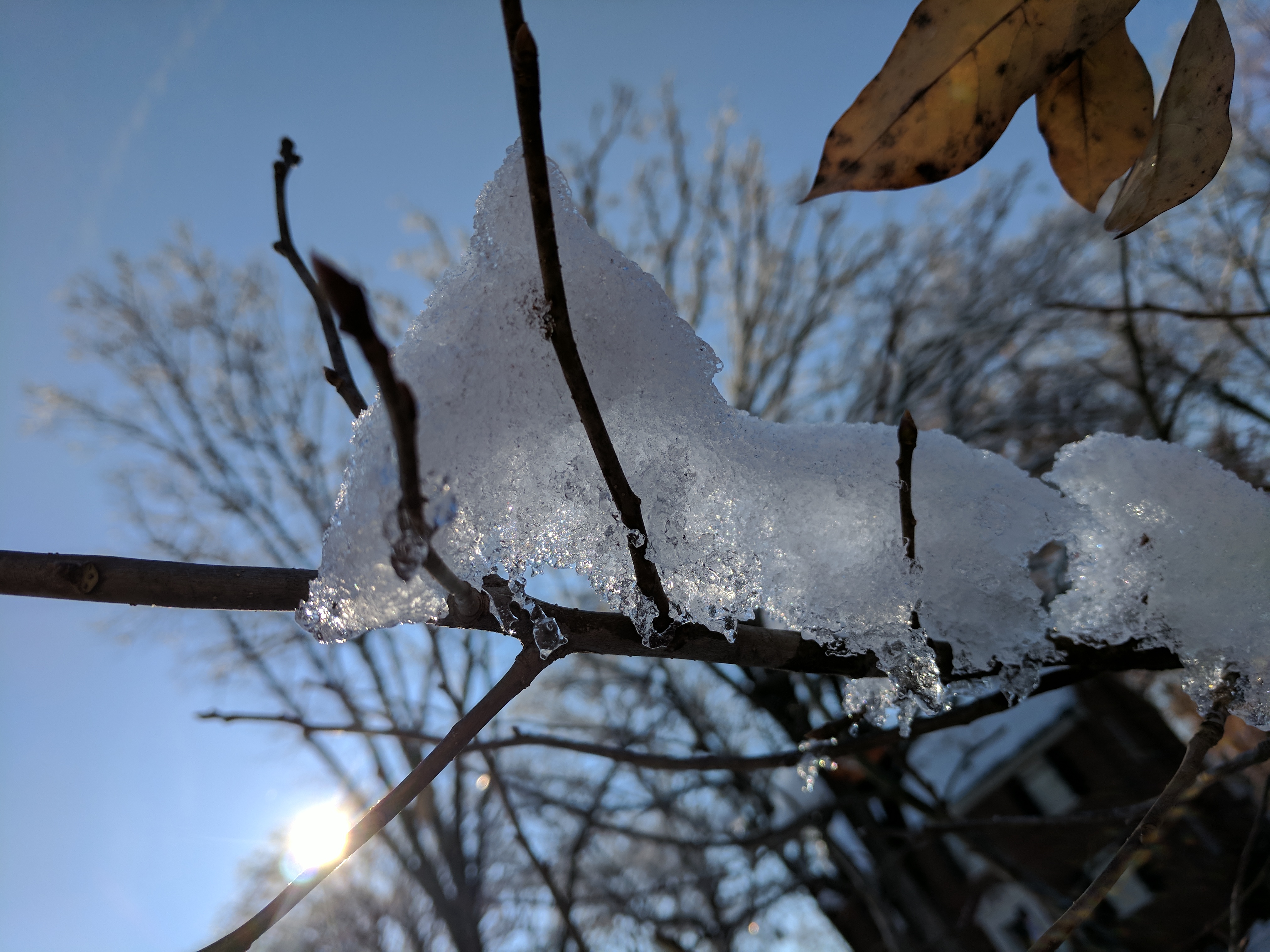
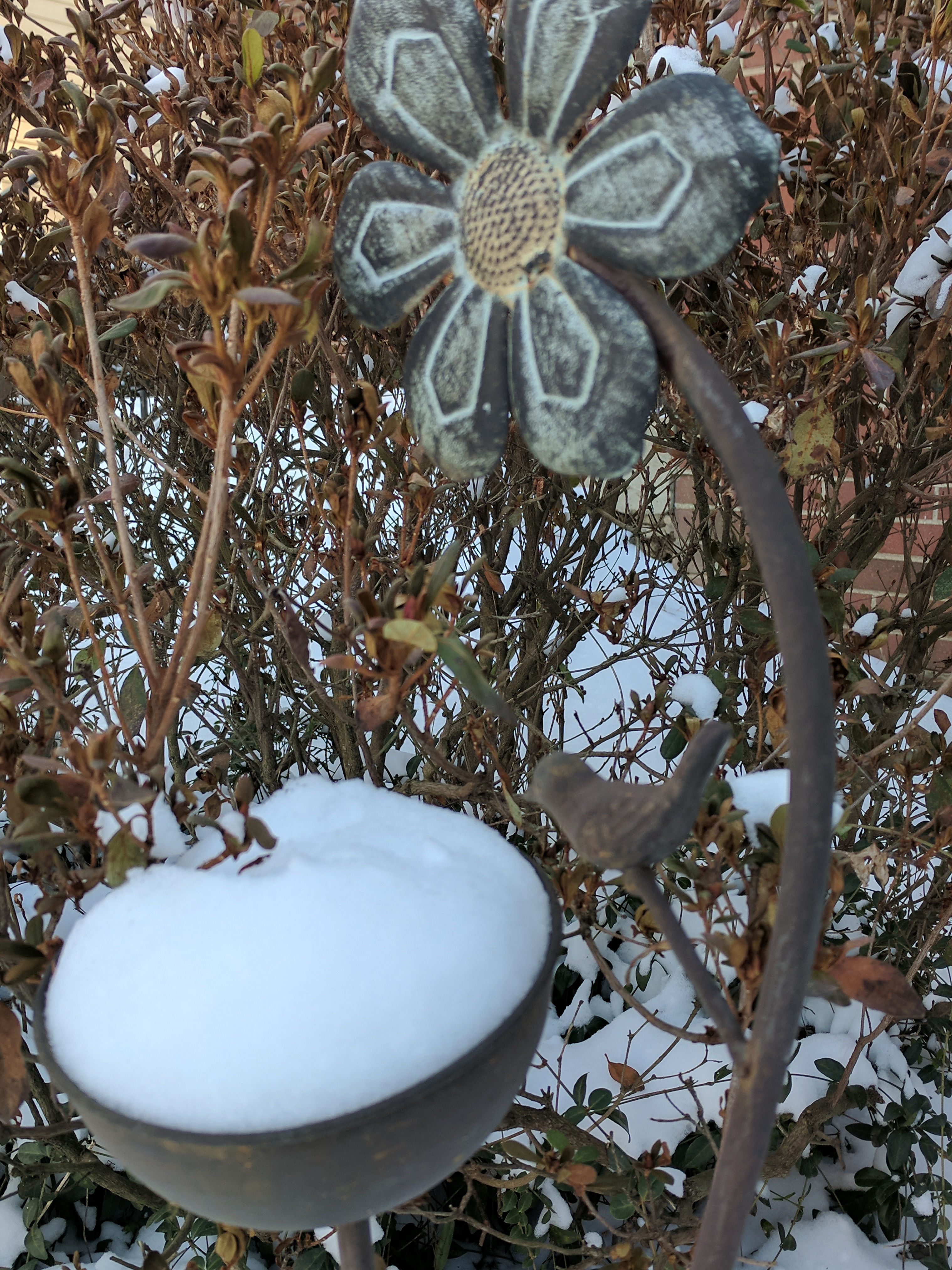
Snow’s meditative and silencing qualities are my buoys of comfort — many adults hate the white stuff, and I’ll admit I am no fan of the ice storm so should our “bomb” friend turn that direction, our loving relationship is officially cancelled. Snow is candles, wool socks and a chance to stay inside — willingly (I am not usually a fan of the indoors or staying at home and all its laundry implications). While snow allows the mind to rest and the gaze to settle evenly — is also energizing in all its light reflective gloriousness. The peace that snow provides as it coats the landscape, allows new ideas to sprout — snow is the incubation that is needed by the soul and the heart. My yoga instructor says each time our class teeters in tree-pose that there is always movement in balance. So it goes with the snowfall — in peace, there is always endeavor.
When you wake up to crickets in the morning, you know two things: rain is imminent and it is going to be pressure cooker hot by 10 am. Your home thermometer may read 72F, but your body will soon say, “I cannot move another inch…” because you know that soupy humidity paralysis will creep into every brick pore to infiltrate your home. There will be that momentary relief when the rain starts — you and your people will run outside to frolic. But once those ploppy, quarter-sized drops pick-up speed, the gutters will begin to spew back what they’ve just ingested. The it begins — the steam starts rising from the drenched pavement to meet the drops still falling from the sky — meeting somewhere around your knees. Steam and rain — the warm cloud you can touch. Refuge from this coolish swelter — that feverish feeling where you’re both hot and cold is to run back inside and sit — under the fan, AC on — until you need a sweater again.






 Winter never allows for much light — but here in the East, we’re lucky on most January days to reap what I call, “half-light” — a condition where the deciduous trees appear to let in more light and sound, but because of the sun’s position and earth’s rotation, we end up stuck with just a fraction of what we’d assume. Low-hanging cloud cover only further dilutes the weak power of our biggest and brightest star. For those of us that struggle through the gray with sun lamps, acupuncture, Vitamin D, bamboo socks and warm frothy drinks — half-light is one of the biggest blows to the psyche.

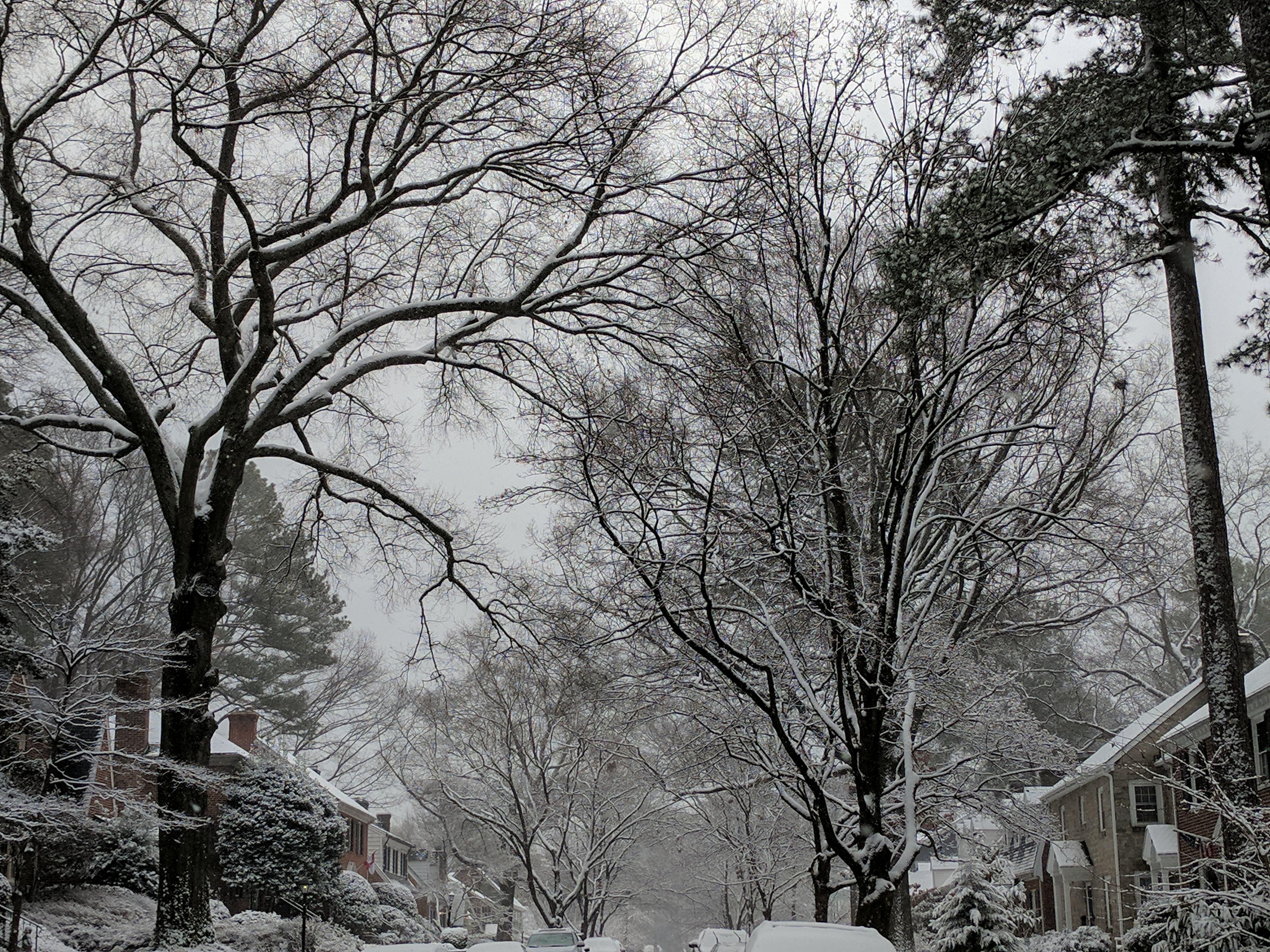 Yet another snow event has blanketed the near-South, in winter wonder — this time not so much powder as last time, a little more wet and without a doubt this morning will be an icey mess. My family is struggling through a new health diagnosis for one member of our small team; and it is into this snow that I walked as I pondered the angels among us. While I am not the person of the strongest faith (in anything), I do try to take my time in nature as a gift from above and I regularly see the messages — not always the best messages, but clear interventions nonetheless. When I see a bluebird, I know it’s my gram sending a direct dispatch to me to either wake-up, or get moving — metaphorically, intellectually or physically — as standing still was just not her thing.
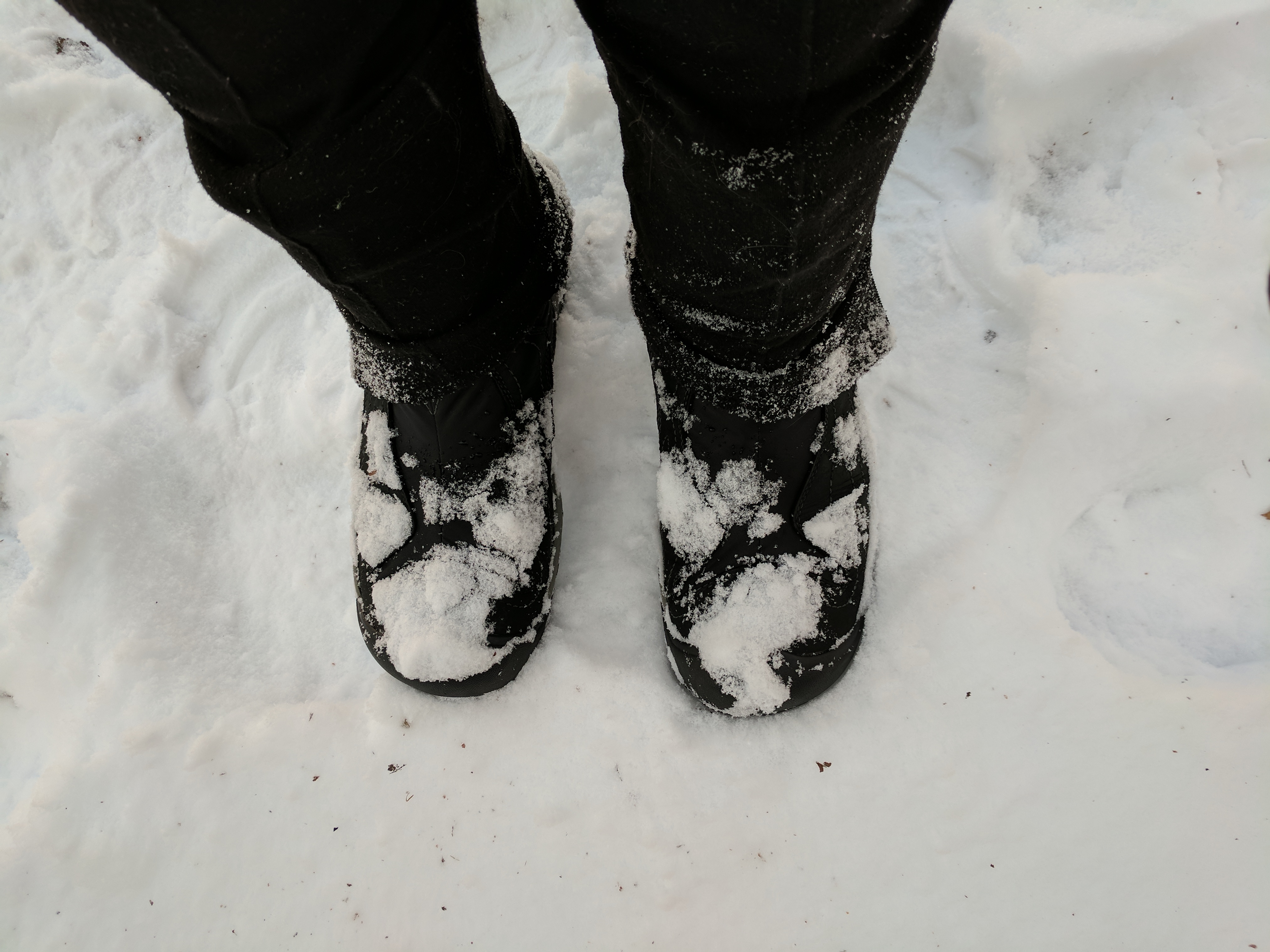 These boots are size 10 Keens — purchased at REI several years ago when we still lived in the often damp Pacific Northwest. At the time I was trying to replace nearly 20 year old hiking boots that I’d purchased in the Northwest, hiked parts of the Pacific Crest Trail in, taken these same boots east and hiked parts of the Appalachian Trail in. But those old boots, just could never be replaced and when the sales staff that day in REI told me these new Keens were so stylish I could wear them downtown, all I could wonder is, where on earth are these boots downtown appropriate? While these Keens fit well and seemed to fill a rain/snow need (at the same time making my feet look monstrously huge), in no way were these “downtown” much the same as my aged hikers were not “downtown” — I’m no slave to fashion, but I do have my boundaries.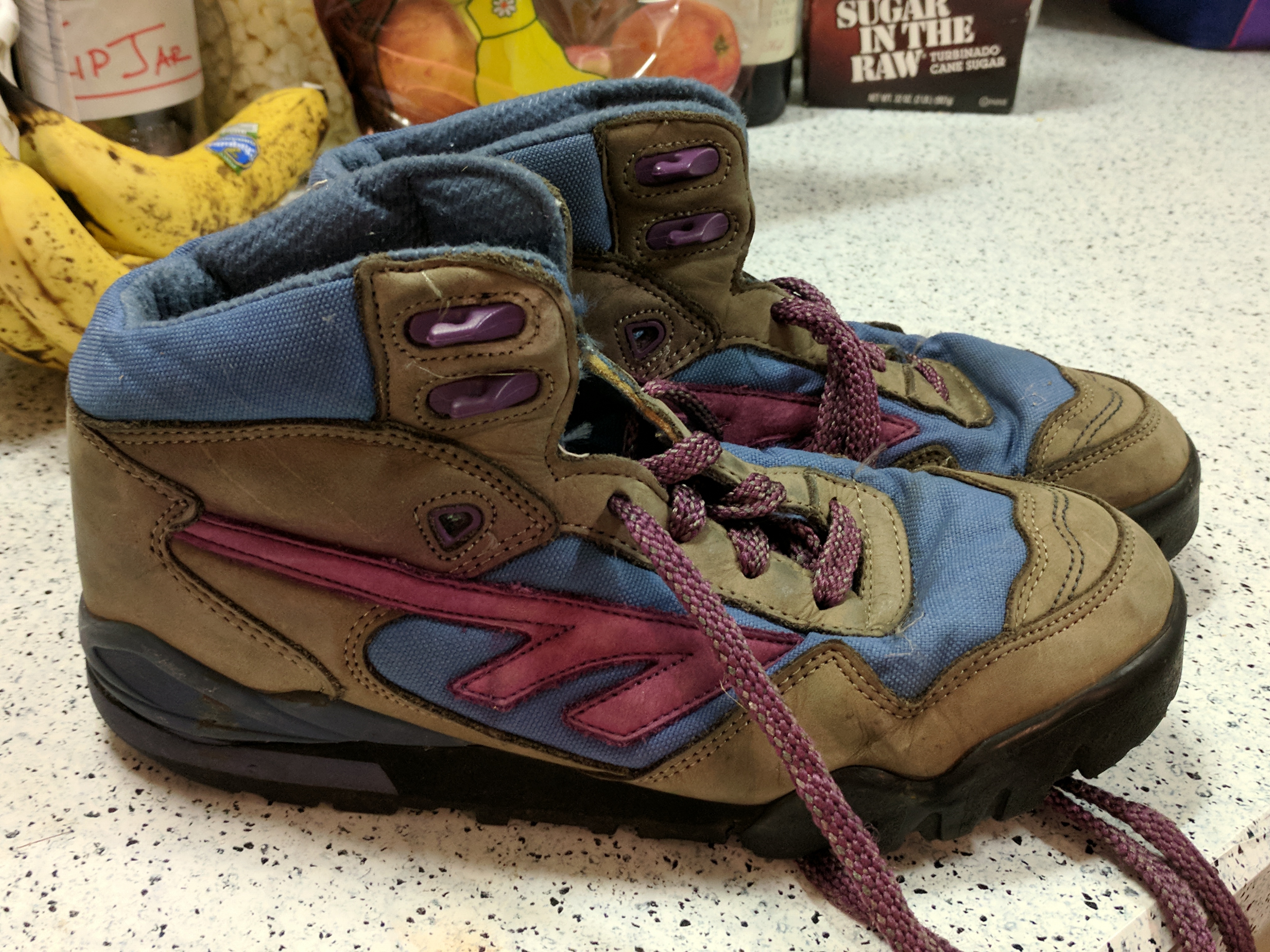
 3 Coffees A Day